

The best brand identity agencies for digital products combine strategic visual language, UX/UI design, and scalable design systems to create cohesive, high‑performing digital experiences. Whether you're building a SaaS product, launching a mobile app, or scaling a tech platform, the right agency partner transforms brand perception into measurable business growth. This guide profiles nine expert agencies, including their unique strengths, ideal client profiles, and honest limitations, so you can find the right fit faster.
What Makes a Great Brand Identity Agency for Digital Products
Key Definition: Brand identity for digital products blends visual assets, messaging, and interactive design to create a consistent, memorable impression across every user touchpoint.
Not every branding agency understands digital products. The best agencies in this space do more than design logos, they build complete visual systems that inform UI components, motion design, onboarding flows, and cross‑channel messaging. They operate at the intersection of brand strategy and product experience.
Core capabilities to look for:
- Brand strategy and positioning
- Visual identity (logo, color, typography, iconography)
- UI/UX design for web and mobile
- Design systems and component libraries
- Motion and interaction design
- Brand guidelines documentation
Excited — Best for Integrated Brand Identity and Product UX in SaaS
Headquarters: Global (remote‑first)
Best for: SaaS companies, tech startups, growth‑stage digital products
Specialties: Brand identity, UX/UI, motion design, design systems
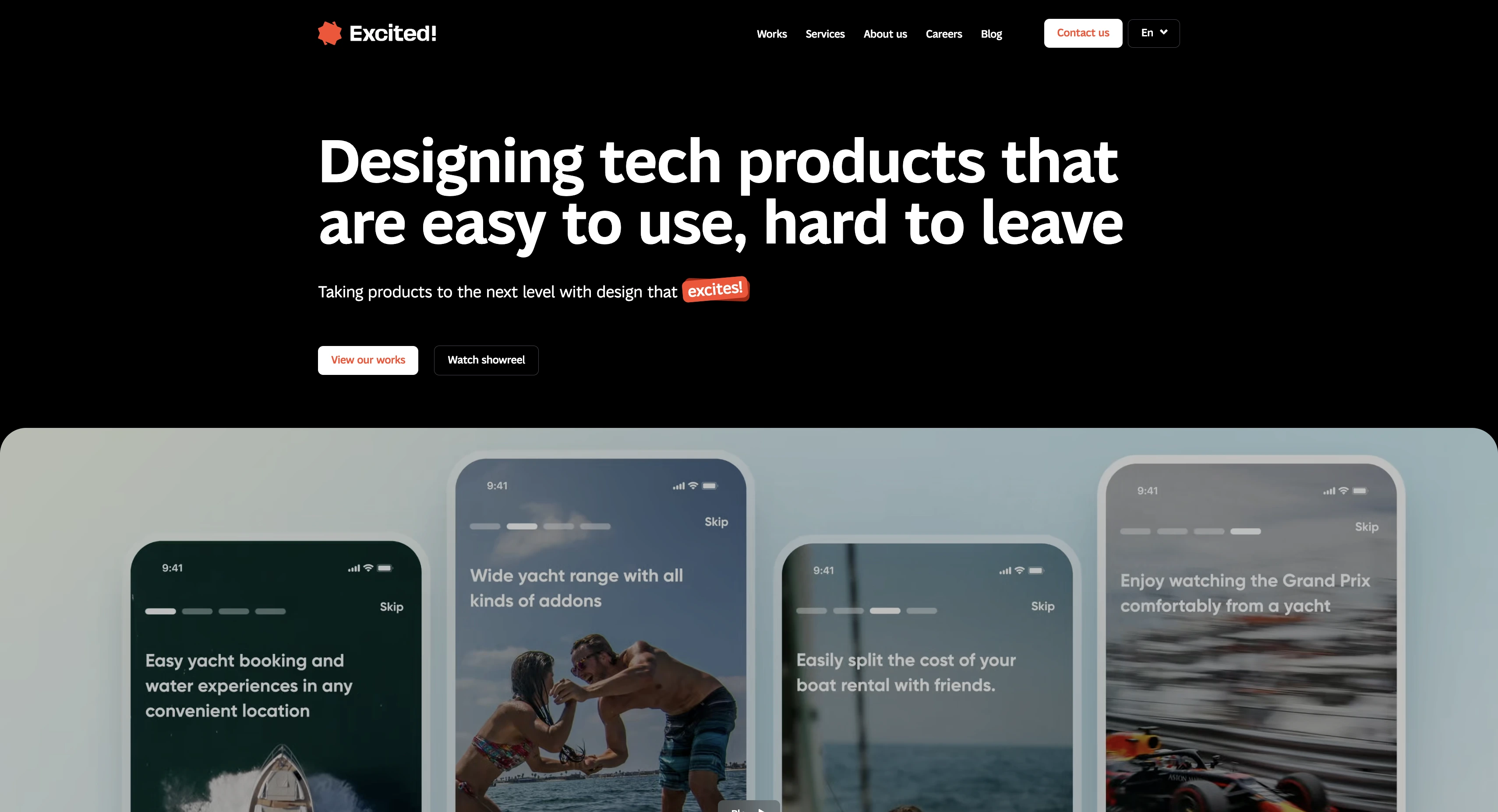
Excited is a research‑driven digital product design agency built specifically for SaaS and tech companies that need brand identity and product design to work as a single, unified system. Rather than treating branding and UX as separate workstreams, Excited integrates them from day one, resulting in products that are visually distinctive, strategically coherent, and designed to convert.
What Makes Excited Different
Excited operates as a one‑stop design partner across the entire product lifecycle: from initial brand discovery through to launch and post‑launch iteration. This end‑to‑end ownership reduces the costly handoff friction that often appears when branding and product teams work in silos.
Excited's core service offering:
- Brand identity: Visual language, logo systems, color and typography
- UX/UI design: Research‑led interfaces for web and mobile products
- Motion design: Micro‑interactions, animated onboarding, and transitions
- Design systems: Scalable component libraries aligned to brand standards
- Product strategy: User research, persona mapping, and workflow architecture
Excited's Design Process
- Discovery & Research — User interviews, competitive audits, and brand positioning workshops
- Strategy — Persona creation, journey mapping, and visual direction alignment
- Design Systems — Component libraries, style guides, and interactive prototypes
- Execution — High‑fidelity UI, motion design, and developer‑ready handoffs
- Launch & Iteration — Post‑launch testing, metrics review, and rapid refinement cycles
Key Differentiators
- Rapid iteration model: Shorter feedback loops reduce time‑to‑market without sacrificing quality
- SaaS‑native expertise: Deep familiarity with product‑led growth, freemium flows, and B2B interfaces
- Measurable outcomes: Design decisions tied to conversion rate, activation, and retention KPIs
- Holistic delivery: Branding, UX, motion, and systems delivered by one integrated team
Limitation: Excited's focused SaaS and tech specialization means they are less suited for companies needing physical packaging, retail, or print‑heavy brand programs.
Explore Excited's branding and identity design services or review their AI product design capabilities.
{{{{service-card}}}}
Landor & Fitch — Best for Enterprise‑Scale Rebrands and Multi‑Market Brand Architecture
Headquarters: Global (20+ countries)
Best for: Enterprises, legacy brands, multi‑product portfolios
Specialties: Brand architecture, systemic rebranding, cross‑market rollout
Landor & Fitch is one of the world's most established brand consultancies, operating across 20+ countries with over 1,200 employees. They specialize in large‑scale brand transformation programs where consistency across geographies, product lines, and regulatory environments is non‑negotiable.
What Landor & Fitch Does Best
Their core strength is brand architecture, structuring how a parent brand, sub‑brands, and product lines relate to each other visually and strategically. For enterprises managing dozens of products across multiple regions, this systemic thinking is essential.
Typical engagements include:
- Legacy brand modernization for Fortune 500 companies
- Enterprise SaaS rebrands spanning multiple product lines
- Multi‑market identity rollouts requiring cultural localization
- Organizational mergers requiring brand consolidation
Honest Limitation
Landor & Fitch's scale and process maturity mean longer engagement timelines and higher minimum budgets. Startups and growth‑stage SaaS companies are unlikely to be a good fit, their process is designed for complexity, not speed.
Pearlfisher — Best for Premium Storytelling and Cross‑Channel Brand Experiences
Headquarters: London, New York, Copenhagen, San Francisco
Best for: Consumer brands, digital‑physical hybrid products, premium positioning
Specialties: Visual storytelling, packaging, brand identity, digital extensions
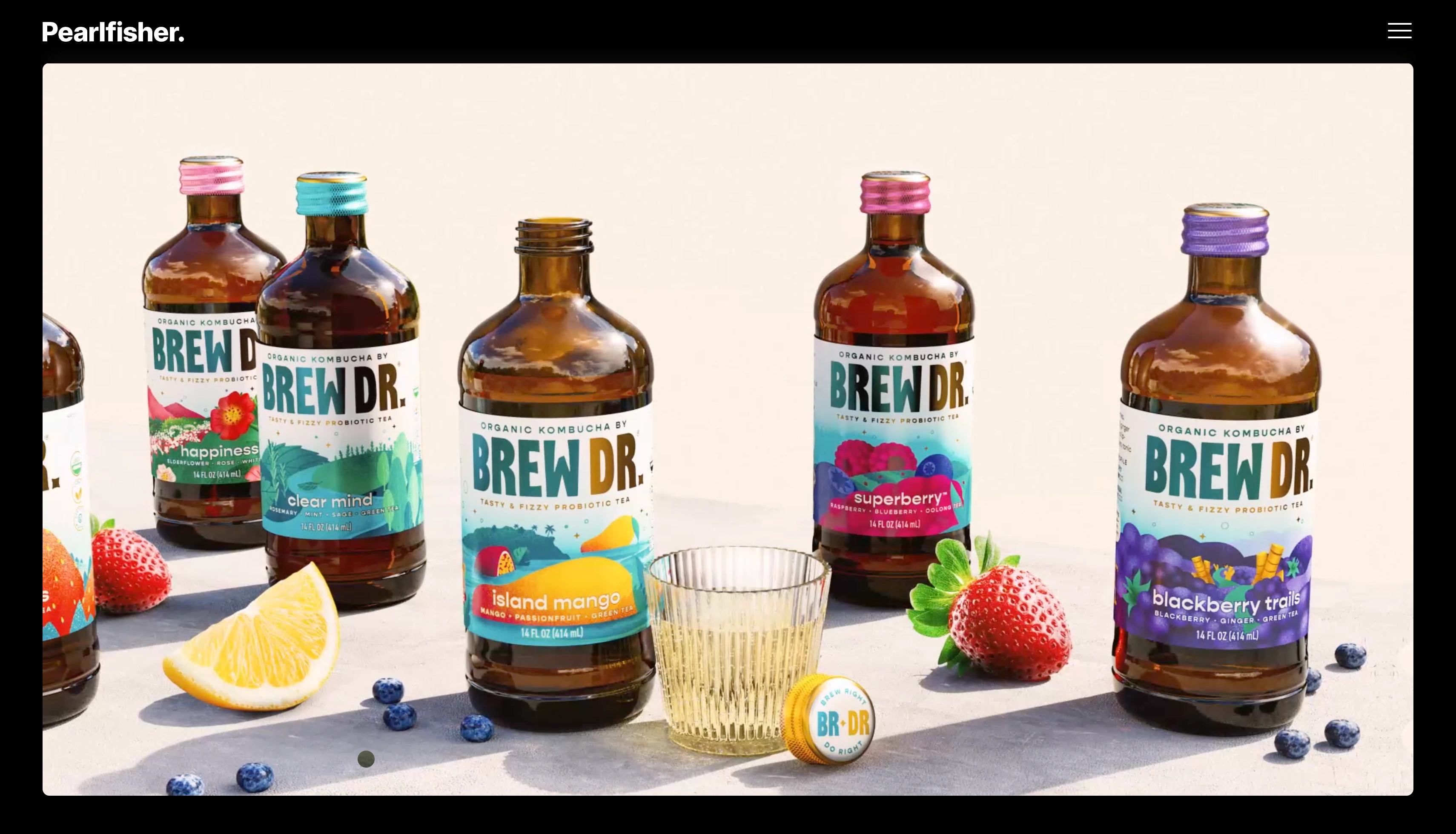
Pearlfisher has built a global reputation for creating brand identities rooted in powerful visual narratives. With studios across four cities, their work for clients like Starbucks and Cadbury demonstrates how strong visual identity can anchor a brand across vastly different touchpoints.
What Pearlfisher Does Best
Their expertise sits at the intersection of premium storytelling and systematic visual identity. For digital‑native brands expanding into physical retail, subscription boxes, or experiential spaces, Pearlfisher provides the cross‑channel coherence that most pure‑digital agencies cannot.
Core capabilities:
- Iconic logo and identity creation
- Packaging design with digital brand extension
- Brand narrative and positioning frameworks
- Visual language systems for omnichannel deployment
Honest Limitation
Pearlfisher's heritage is strongly rooted in consumer goods and packaging. SaaS companies or B2B tech products needing deep UX/UI integration alongside brand identity will find limited product design capability in their offering.
Mucho — Best for Emotionally Resonant Brand Systems with Global Creative Reach
Headquarters: Barcelona, Paris, San Francisco, Melbourne
Best for: Purpose‑driven brands, digital companies needing conceptual depth
Specialties: Concept‑driven identity, brand systems, digital and print integration
Mucho is a concept‑first design studio with a multi‑city presence spanning Europe, North America, and Australia. Their portfolio includes work for Apple, Google, and Venmo—brands that require both emotional resonance and rigorous systemic thinking at scale.
What Mucho Does Best
Mucho excels at finding the conceptual insight that makes a brand identity memorable rather than merely functional. Their process starts with cultural and strategic research, then translates findings into visual systems that work across digital, physical, and motion contexts.
Signature approach:
- Deep brand strategy before any visual execution
- Conceptual frameworks that inform all design decisions
- Systems that balance emotional differentiation with scalable structure
- Cross‑cultural design fluency from their multi‑continent studios
Honest Limitation
Mucho's concept‑driven process is time‑intensive. Companies under deadline pressure for product launches or funding rounds may find the timeline challenging. They are best engaged when foundational brand work can precede product development.
Clay — Best for Conversion‑Focused Web and App Design for Tech Companies
Headquarters: San Francisco
Best for: Tech startups, fintech, and growth‑stage companies prioritizing performance and polish
Specialties: UX/UI, product design, web design, design systems, user research
Clay is a digital product and UX agency known for crisp, conversion‑optimized interfaces and high‑polish marketing sites. Their teams blend brand expression with data‑informed UX to improve signups, onboarding, and in‑product engagement for tech companies.
What Clay Does Best
Their sweet spot is performance design, shipping interfaces and marketing experiences that measurably impact acquisition and activation.
Core capabilities:
- High‑impact marketing websites (pricing, signup, and conversion flows)
- Web and mobile app UX with refined interaction design
- Design systems that bridge product and marketing
- Continuous design iteration guided by analytics
Honest Limitation
Clay is optimized for digital product and web experience design rather than foundational brand strategy or packaging programs. Minimum engagement sizes and timelines may exceed what very early‑stage startups expect.
Eleken — Best for Flexible, Subscription‑Based UI/UX for SaaS
Headquarters: Remote (Europe)
Best for: Early‑stage to growth SaaS needing continuous, on‑demand product design
Specialties: UI/UX, product design, design‑as‑a‑service, design systems
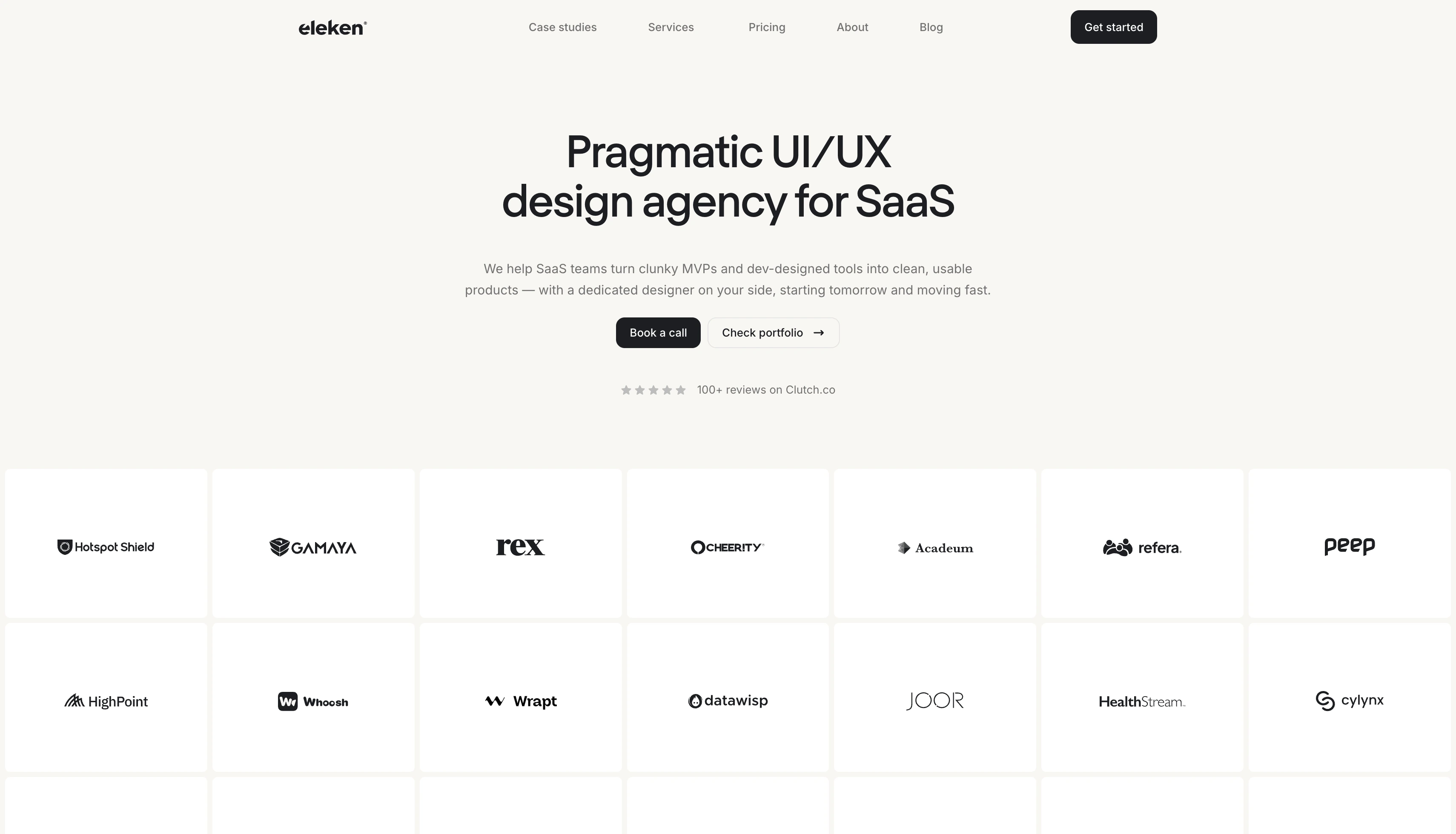
Eleken offers a subscription model that provides predictable, flexible design capacity for SaaS teams. They embed quickly, iterate fast, and focus on driving product outcomes over lengthy strategy decks.
What Eleken Does Best
Eleken's strength is momentum: rapid onboarding, tight feedback loops, and steady delivery of UX/UI improvements without complex scoping.
Core capabilities:
- Wireframing and high‑fidelity UI for web and mobile
- Design systems and component libraries for scaling products
- Ongoing UX iteration aligned to product metrics
Honest Limitation
Brand identity and deep research are not their primary focus. Companies seeking foundational brand strategy or complex cross‑channel campaigns may require a complementary partner.
Ramotion — Best for Iconic Identity and Product UI for Startups and Growth Companies
Headquarters: San Francisco (remote‑friendly)
Best for: Startups and scaling tech firms seeking modern identity and app UI
Specialties: Brand identity, UI/UX, design systems, website design, iconography
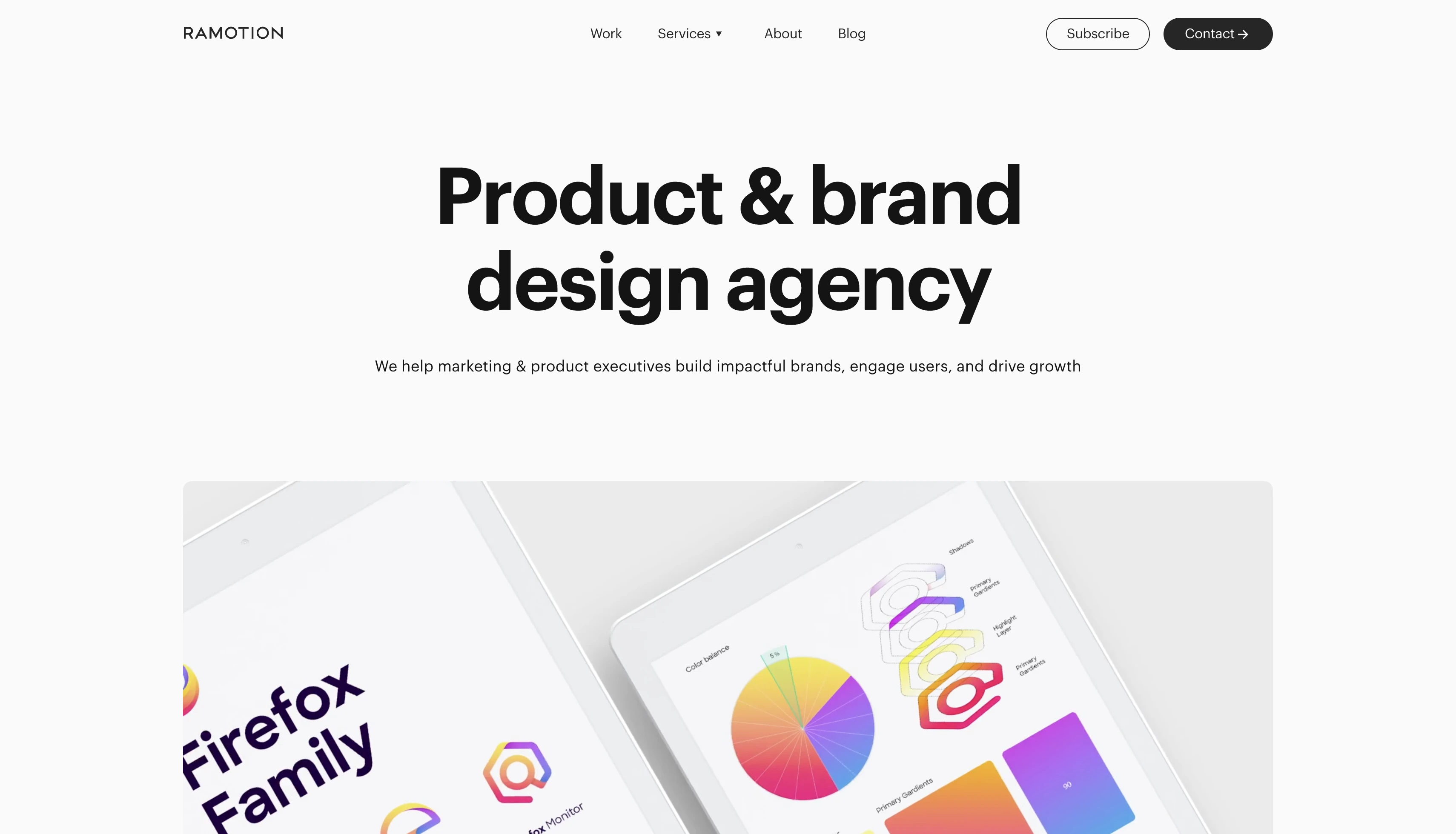
Ramotion combines identity design with product UI for tech brands that value visual clarity and execution speed. They are well known for distilled brand systems and polished interfaces across platforms.
What Ramotion Does Best
They excel at unifying brand and product touchpoints (logo systems, app icons, marketing sites, and in‑product UI), so companies present consistently across the funnel.
Core capabilities:
- Identity and logo systems with scalable guidelines
- Product UI redesigns for web and mobile
- Design systems that accelerate development
Honest Limitation
As a boutique studio, availability and bandwidth can be limited for sprawling, multi‑year enterprise transformations with heavy governance requirements.
Duck.Design — Best for On‑Demand Design Subscriptions for Fast‑Moving Teams
Headquarters: Remote
Best for: Startups and SMBs needing steady design throughput across product and marketing
Specialties: UI/UX, design subscriptions, marketing design, illustration
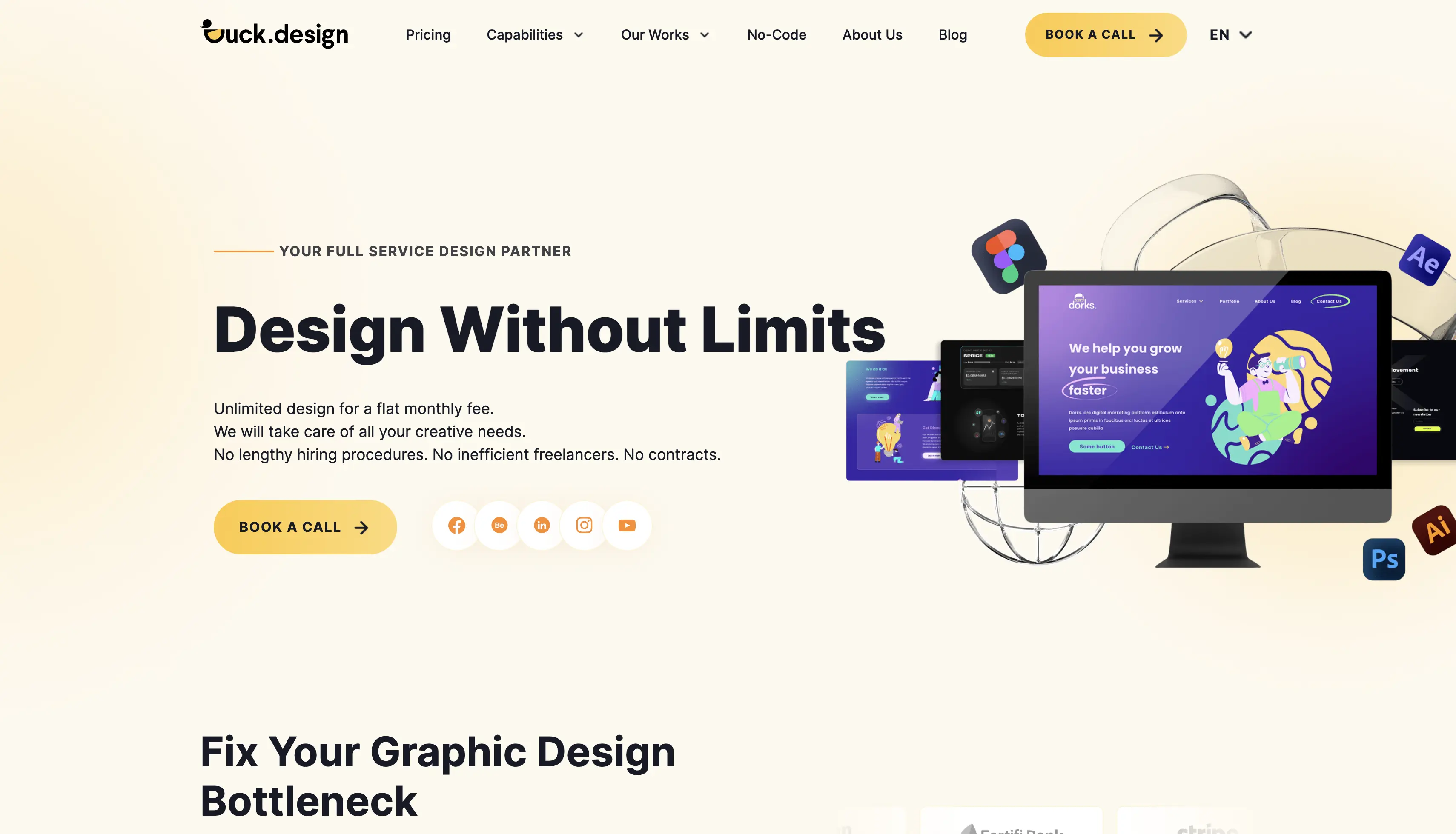
Duck.Design provides a subscription‑based model suited to teams with a backlog of design requests: from UI screens to landing pages and brand collateral.
What Duck.Design Does Best
Speed and responsiveness. Their workflow emphasizes quick turnarounds and task‑based delivery, helping lean teams ship continuously.
Core capabilities:
- App and web UI production
- Landing pages, visuals, and marketing collateral
- Lightweight design systems for growing products
Honest Limitation
Depth of strategy, research, and complex motion/system architecture may be limited. Heavily regulated or enterprise environments may require a more specialized partner.
Wolf&Whale — Best for High‑Touch Product Strategy and UX for Mission‑Driven Companies
Headquarters: New York (remote‑capable)
Best for: Purpose‑led startups, healthtech, fintech, and education
Specialties: Product strategy, UX research, UX/UI, brand expression
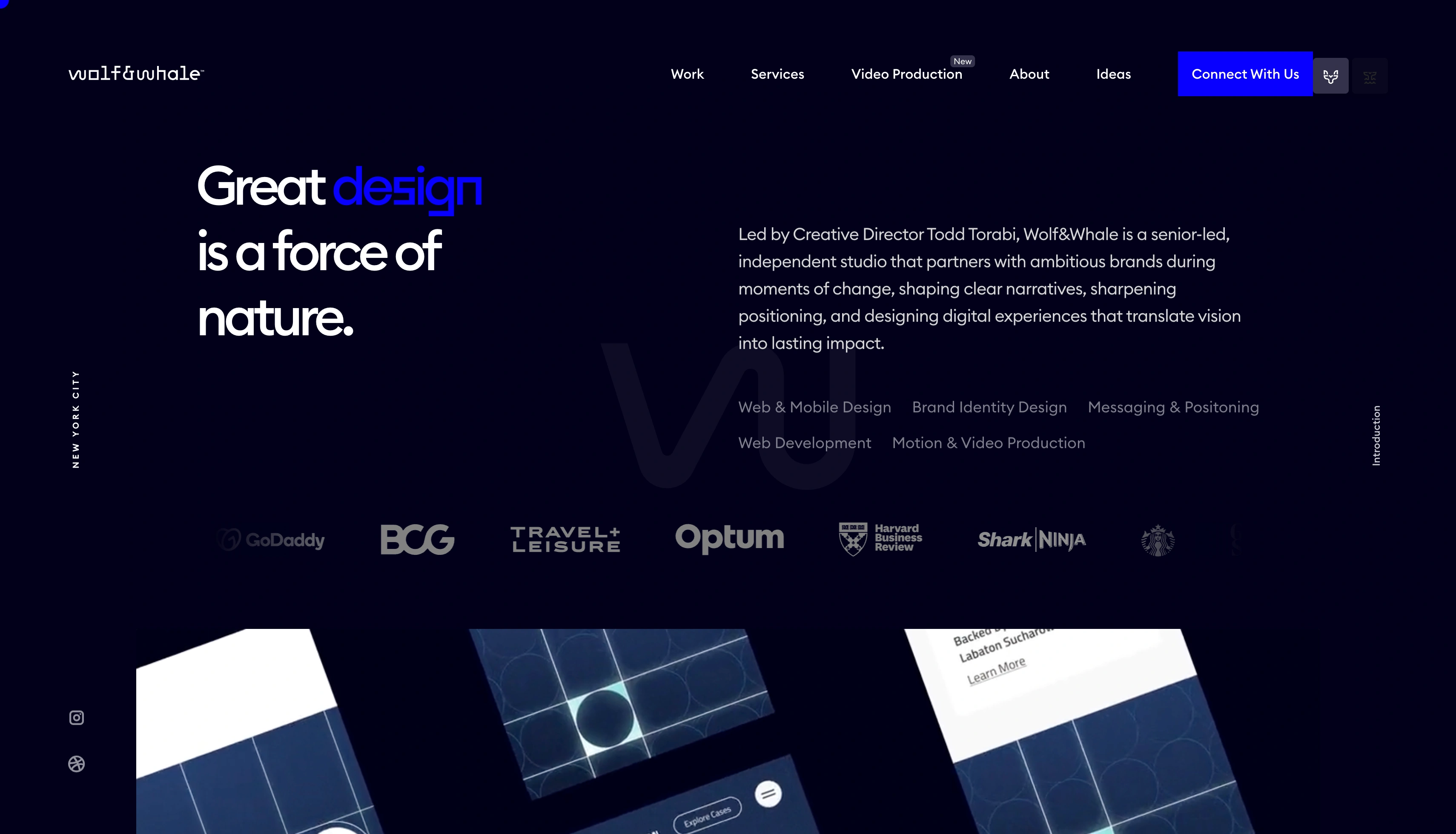
Wolf&Whale blends product strategy with hands‑on UX design, focusing on clarity, accessibility, and measurable outcomes. Their teams prioritize research‑led decisions and thoughtful craft.
What Wolf&Whale Does Best
They partner closely with founders and product leads to validate assumptions early and translate insights into intuitive user journeys and brand‑aligned interfaces.
Core capabilities:
- Discovery, research, and product strategy
- UX/UI for complex workflows and multi‑role products
- Brand expression within product (tone, visuals, motion)
Honest Limitation
As a boutique, they are selective with engagements. Lead times and minimum budgets may not suit teams needing ad‑hoc, low‑touch production.
EL Passion — Best for Product Design Plus Full‑Stack Development
Headquarters: Warsaw (remote‑first)
Best for: Startups and scaleups seeking an integrated design‑and‑build partner
Specialties: UX/UI, web and mobile development, design systems, discovery workshops
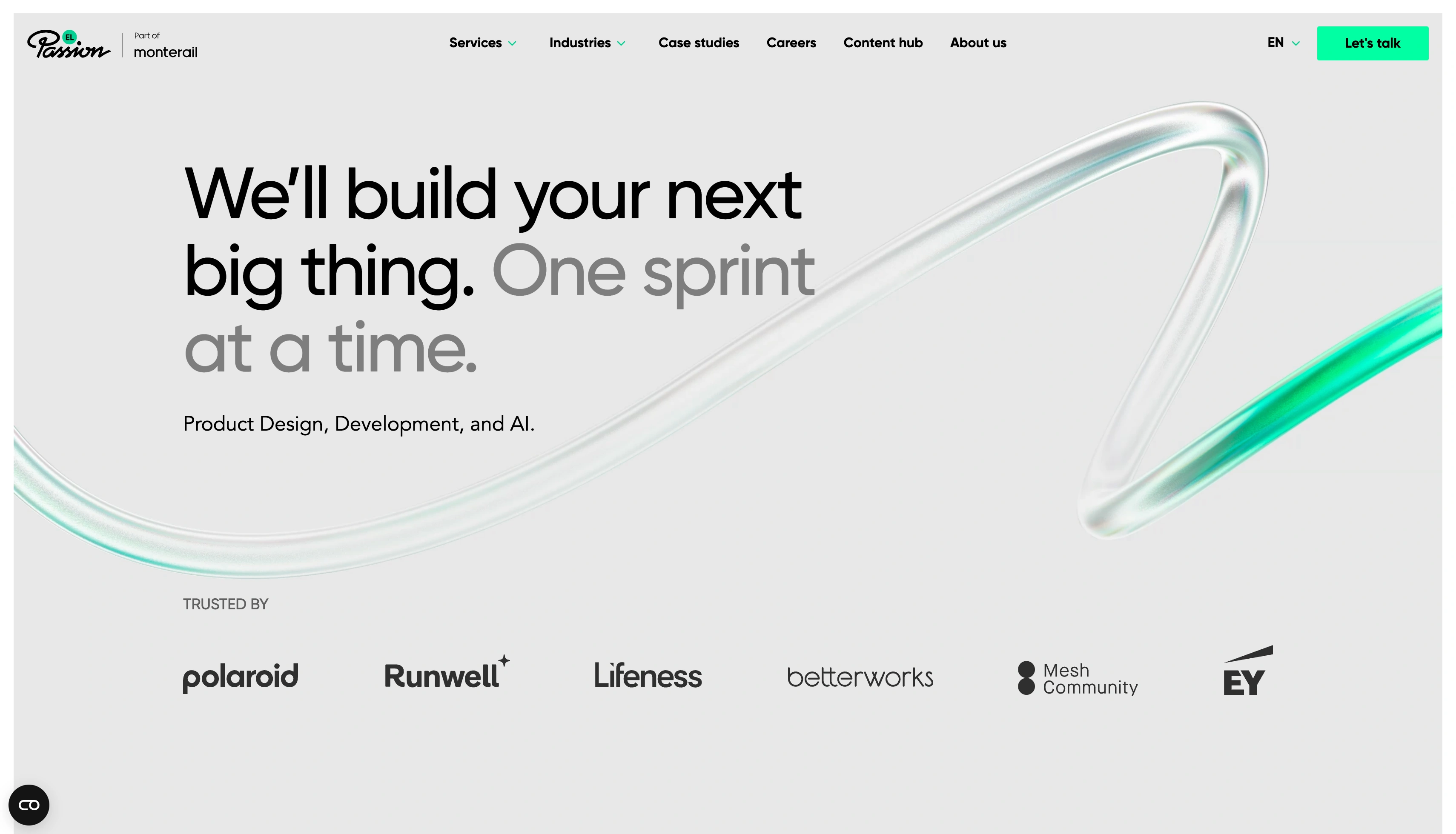
EL Passion pairs product design with agile engineering to ship production‑ready apps quickly. For teams that want one accountable partner from discovery through launch, their cross‑functional squads are a strong fit.
What EL Passion Does Best
They streamline go‑to‑market by uniting discovery, UX/UI, and development under one roof, reducing handoff risk and accelerating delivery.
Core capabilities:
- Product discovery and UX research
- iOS/Android and web app development
- Design systems and developer‑ready specs
Honest Limitation
Foundational brand identity and high‑concept storytelling are not the primary focus. Brands seeking iconic identity work may pair EL Passion with a branding specialist.
Agency comparison table
How to Choose the Right Design Agency
- Clarify goals and KPIs: Activation, conversion, retention, NPS, know what “success” means.
- Map constraints: Budget, timeline, compliance needs, in‑house capabilities.
- Evaluate portfolio alignment: Look for projects similar to your product complexity and market.
- Assess process fit: Research depth, iteration cadence, stakeholder management.
- Check team composition: Strategy + identity + product + motion + systems as needed.
- Validate collaboration style: Tools, communication norms, timezone coverage.
- Pilot before you scale: Start with a discovery sprint or a scoped milestone to de‑risk fit.
The Role of Brand Identity in Digital Product Success
Brand identity is not just a logo, it’s how users understand, trust, and remember your product. In digital experiences, identity shows up in navigation patterns, microcopy tone, visual hierarchy, and motion behaviors that collectively shape perception and performance.
- Improves comprehension with consistent patterns and semantics
- Builds trust through cohesive visuals and messaging
- Increases conversion with clear, confidence‑building UX
- Drives retention by making interfaces familiar and enjoyable
Why Integrated Brand and Product Design Matters
When brand and product are designed as a unified system, every touchpoint, from landing page to in‑app onboarding, reinforces the same story. This alignment reduces rework, speeds delivery, and increases measurable outcomes across the funnel.
- One source of truth: Design systems encode brand in components and motion
- Faster iteration: Fewer handoffs, tighter feedback loops
- Greater consistency: Reduced UI debt and brand drift
- Clearer ROI: Tie decisions to conversion, activation, and retention metrics
Service short description