Strong brand identity for digital products drives user retention, investor confidence, and market differentiation. The studios below were selected for their ability to unify visual language with product strategy—delivering measurable outcomes across SaaS, healthcare, AI, and emerging tech. Whether you need a startup sprint or an enterprise rebrand, this guide compares the 12 best product design studios excelling at brand identity today.
What Is Brand Identity for Digital Products?
Brand identity for digital products is the visual and strategic expression—logo, color palette, typography, iconography, motion, and UI components—that aligns a product's user experience with the company's core values and business goals.
For digital‑first companies, brand identity is not decorative. It is functional infrastructure. A coherent visual language reduces user cognitive load, builds trust across touchpoints, and creates the consistency that turns first‑time users into loyal advocates. Research consistently links strong brand systems to higher retention rates, faster user onboarding, and stronger positioning during fundraising.
How We Selected These 12 Studios
Each studio on this list was evaluated against four core criteria drawn from industry‑recognized selection standards:
- Product‑to‑brand continuity: Does the studio connect UI/UX decisions to overarching brand strategy, not just aesthetics?
- Cross‑disciplinary teams: Are research, design, engineering, and strategy embedded in the same engagement?
- Transparent collaboration models: Does the studio use structured processes—discovery sprints, weekly syncs, async feedback loops—that keep clients informed?
- Standout client outcomes: Can the studio demonstrate measurable business impact from brand identity work—growth, funding, conversion lift, or retention?
Studios were sourced from aggregated industry rankings, client reviews, portfolio analysis, and verified case‑study outcomes. The list spans independent boutiques, global consultancies, and specialized digital studios to give readers a full spectrum of options.
Excited
Best for: Growth‑stage companies in SaaS, healthcare, AI, and emerging tech seeking research‑backed brand identity systems tied to measurable business outcomes.
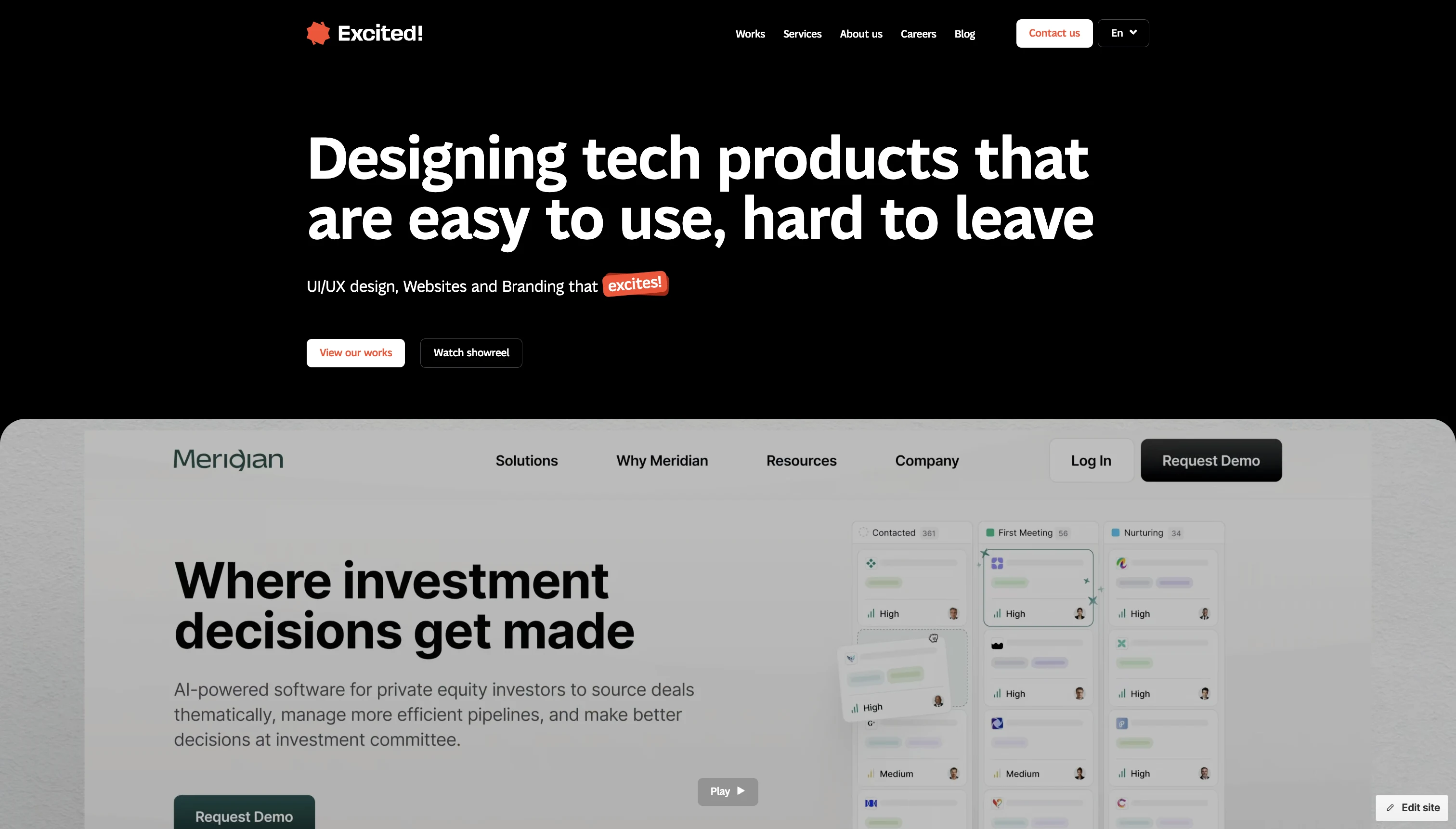
Excited is a strategic, research‑driven product design studio built specifically for digital‑first organizations at inflection points—pre‑launch, post‑funding, or scaling into new markets. Unlike transactional vendors, Excited operates as a senior design partner, immersing in each client’s business, users, and data from day one to turn UX into a real competitive advantage.
Excited's Immersion‑First Approach
Excited begins every engagement with deep discovery: stakeholder interviews, competitive landscape analysis, user empathy sessions, and data audits. This immersion phase ensures that the resulting brand identity is not generic—it emerges directly from the product's users, market position, and growth ambitions. The outcome is a visual language that feels inevitable rather than applied.
This methodology is especially valuable for companies in regulated or complex sectors—healthcare, fintech, AI platforms—where brand identity must simultaneously communicate trust, innovation, and compliance without visual compromise. Excited’s cross‑industry experience and craft‑obsessed execution help make that balance feel coherent and credible.
Services and Deliverables
- Brand identity systems: Logo, color, typography, iconography, motion principles, and brand voice
- Scalable design systems: Component libraries, Figma tokens, and governance documentation built for engineering handoff
- UX audits and redesigns: Diagnostic reviews that connect UX friction points to brand perception gaps
- Product strategy: Roadmap alignment connecting visual language decisions to retention and conversion goals
- AI product design: Specialized experience designing interfaces for AI‑native products across emerging tech sectors
Why Excited Stands Out
Excited uses structured weekly sessions combined with async feedback loops—a collaboration model that leading agencies use to keep executive stakeholders informed without slowing design velocity. This approach is especially suited to senior product leaders and CTOs who need design progress to move in parallel with engineering sprints.
{{{{service-card}}}}
Pentagram
Best for: Organizations seeking iconic, partner‑led brand identity with deep cultural resonance and sophisticated visual storytelling.
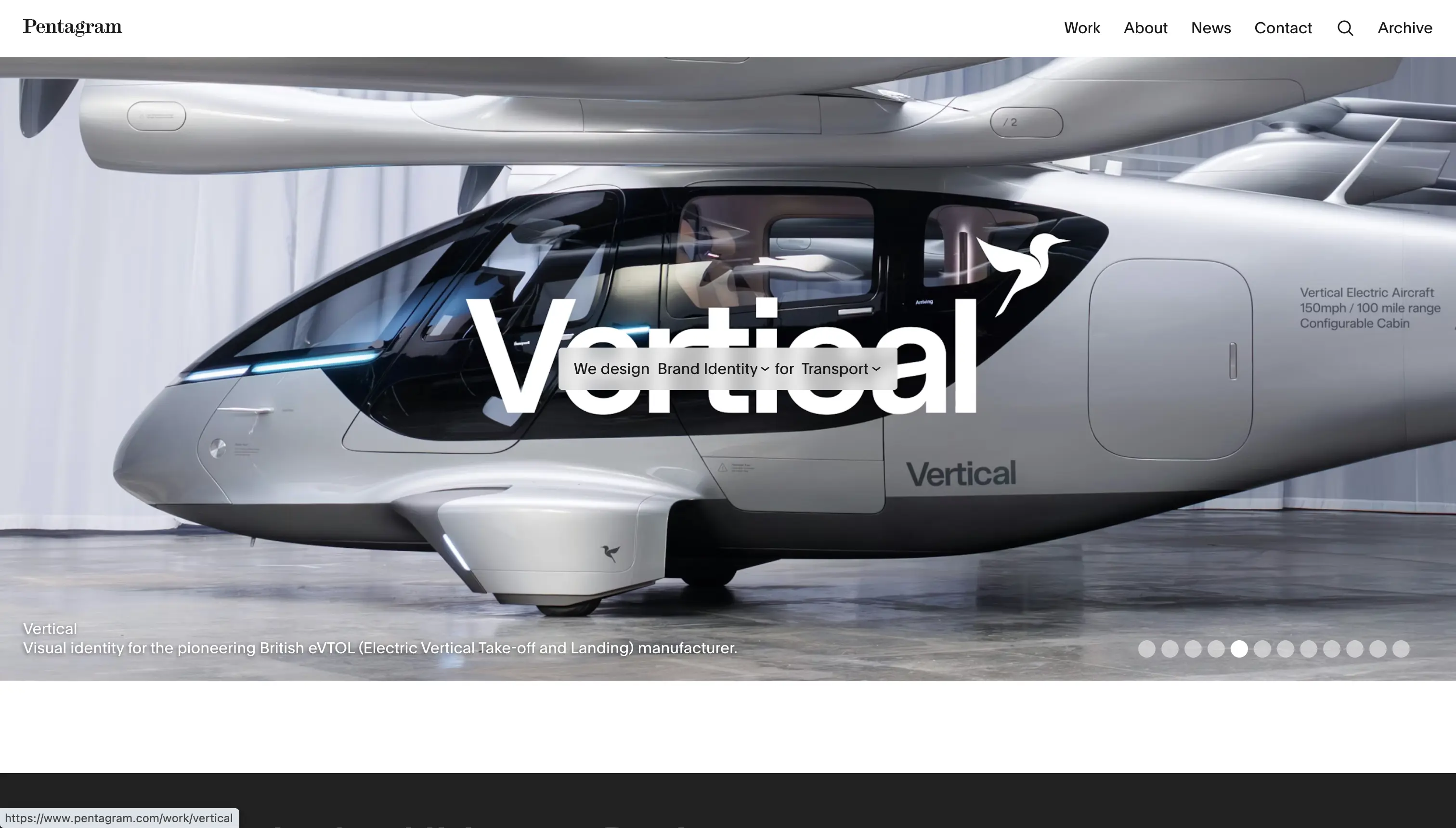
Pentagram is the world's largest independent multidisciplinary design consultancy, according to industry recognition. Founded in London in 1972, the firm operates as a collective of individual partners—each a recognized expert—who lead projects personally rather than delegating to junior teams.
What Sets Pentagram Apart
- Partner‑led model: Every project is led directly by a named partner, not an account manager, ensuring senior creative thinking at every stage
- Cross‑functional depth: Partners span graphic design, architecture, industrial design, and digital product, enabling genuinely multidisciplinary brand systems
- Cultural authority: Pentagram's brand work carries inherent credibility that can elevate a product's perceived positioning during launch and funding
Ideal for: Established companies, cultural institutions, or well‑funded startups seeking prestige brand identity with enduring design value. Budget expectations should be set accordingly—Pentagram operates at the premium tier.
Significa
Best for: Companies that want design and engineering handled as one discipline, not two handoffs.

Significa is an award-winning design and development agency based in Porto, Portugal, combining user-centred design with engineering excellence to build digital products that are both reliable and impactful for clients worldwide.
Where Significa Excels:
Design-to-build continuity: One team owns the product from UI/UX through custom software development, so nothing gets lost in handoff Proven at scale: A portfolio spanning e-commerce, SaaS, and large-scale platforms for clients like FC Porto, Hey Harper, and The Fertility Partnership Values-led delivery: A certified B Corp and member of 1% for the Planet, with a focus on usability, scalability, and measurable business outcomes
Ideal for: Startups to enterprise clients who want one partner owning both product design and the engineering that ships it.
IDEO
Best for: Complex, regulated, or service‑driven digital products that require deep ethnographic research before visual language decisions are made.
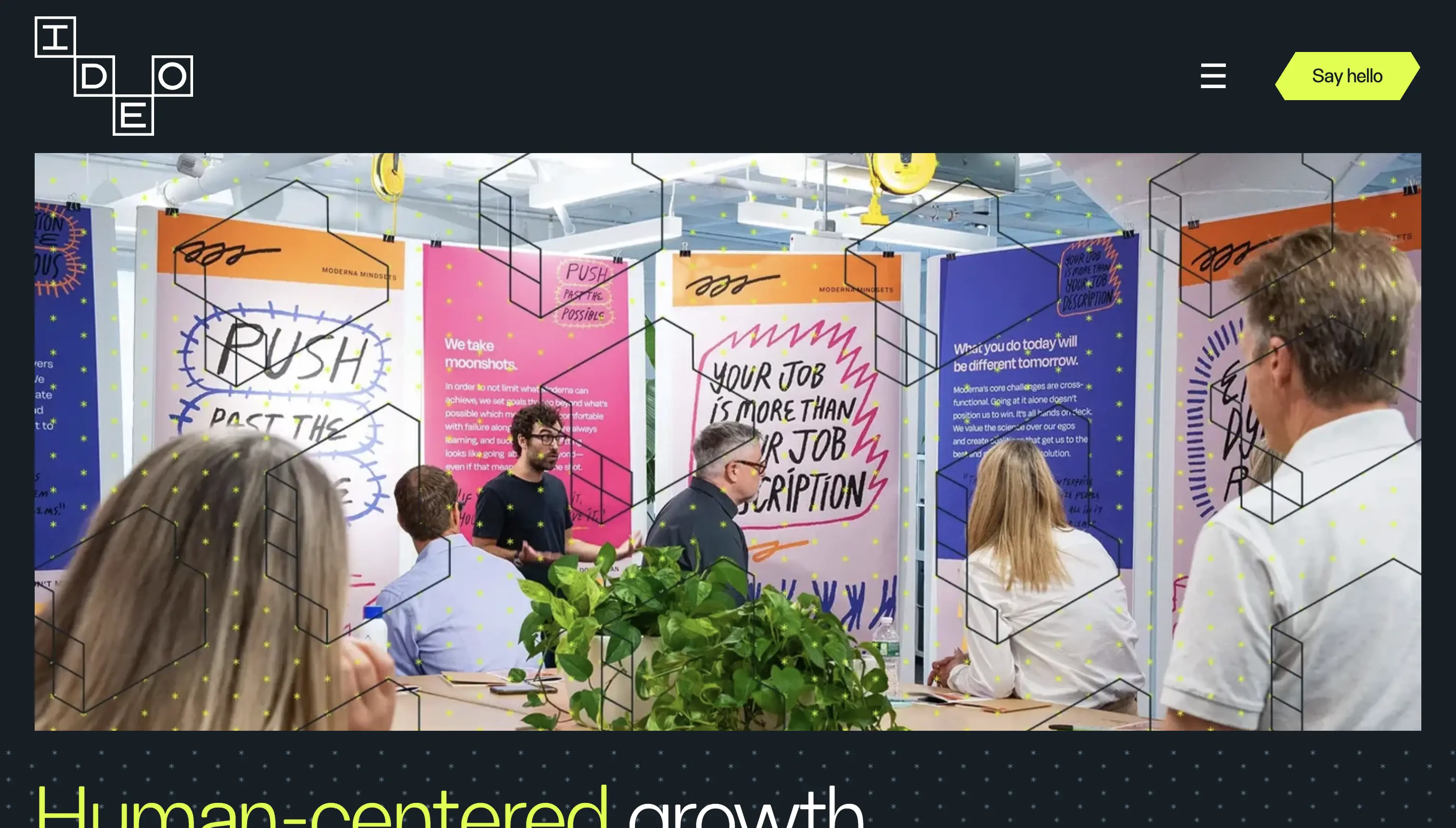
IDEO is a global leader in human‑centered design for digital products, known for pioneering design thinking as a business methodology. Founded in Palo Alto in 1991, IDEO has shaped how organizations approach innovation—treating empathy, prototyping, and iteration as core tools of brand and product development.
Where IDEO Adds the Most Value
- Regulated sectors: Healthcare platforms, government digital services, and fintech products benefit from IDEO's compliance‑aware design thinking
- Service design integration: IDEO treats brand identity as one layer of a broader service experience—useful for companies where the product is inseparable from the service
- Innovation exploration: For organizations at genuine product‑market fit uncertainty, IDEO's exploratory methodology can define the brand problem before attempting to solve it
Limitation to note: IDEO's engagements are substantial in scope, time, and budget. They are best suited for organizations with runway to invest in rigorous discovery, not teams needing rapid brand delivery.
Ustwo
Best for: Human‑centered product design with rich brand expression, particularly for companies seeking long‑term design partnerships or games‑to‑SaaS transitions.
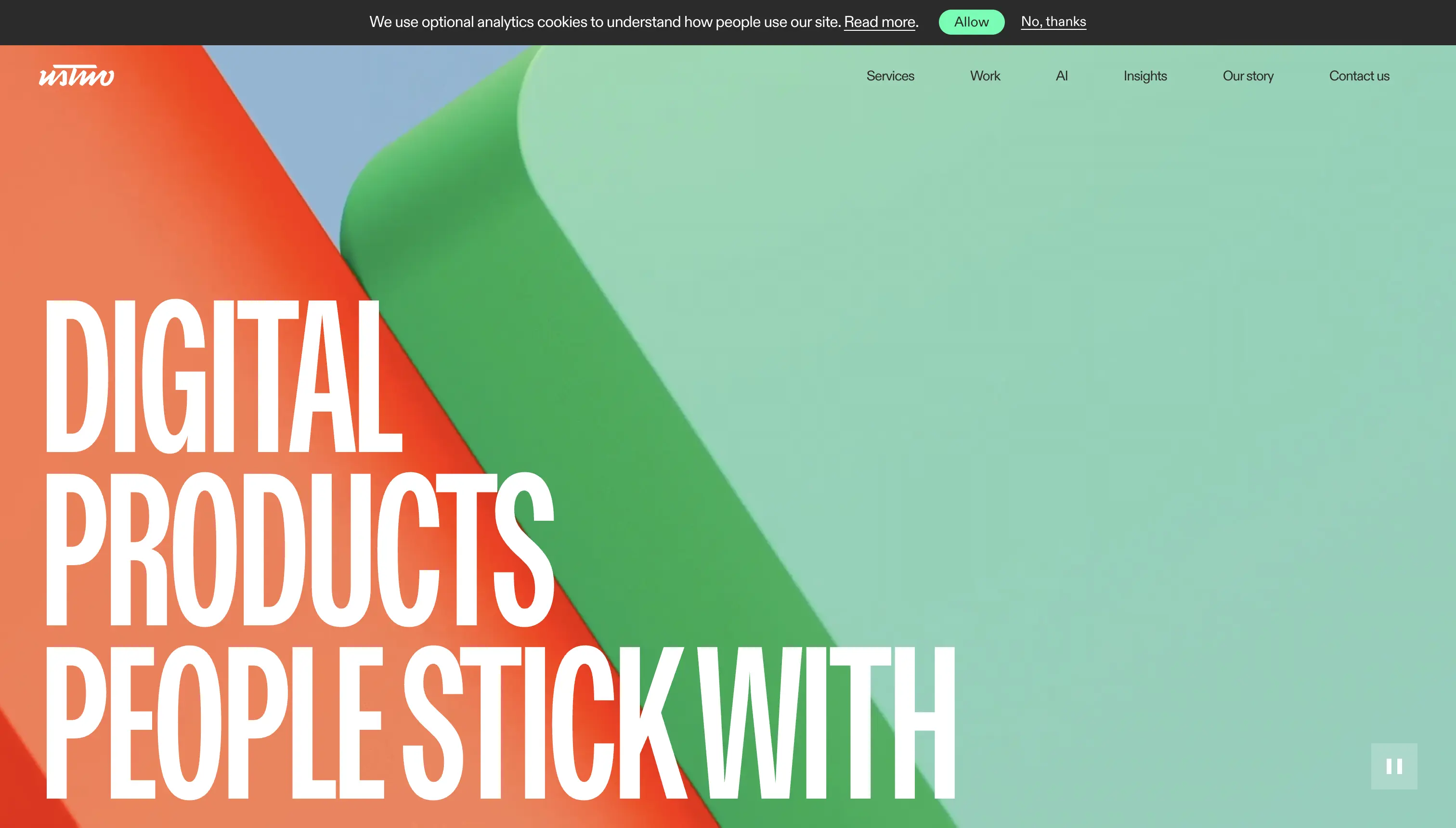
Ustwo brings over 20 years of product design experience and a distinctive product subscription model that sets them apart from project‑based studios. Based in London with studios in New York, Malmö, and Sydney, Ustwo has built a reputation for products that feel both technically sophisticated and emotionally resonant.
Fantasy
Best for: Consumer platforms and premium interfaces where brand expression and conversion must work hand in hand.

Fantasy is known for cinematic, high‑polish product experiences that translate brand strategy into UI motion, hierarchy, and micro‑interactions. Their work often becomes the visual benchmark in a category, helping products feel premium without sacrificing speed to value.
Fantasy's Brand‑Led UI Approach
- Conversion‑focused visuals: Visual language and interaction patterns designed to move users through key flows
- Motion as meaning: Purposeful animations that reinforce brand personality and system comprehension
- Prototype‑heavy process: Clickable concepts early and often to validate direction with stakeholders
Ideal for: Consumer marketplaces, media platforms, and fintech apps seeking high‑impact product aesthetics tied to measurable KPIs.
MetaLab
Best for: SaaS and platform products that need minimalist, scalable brand systems embedded in design ops.
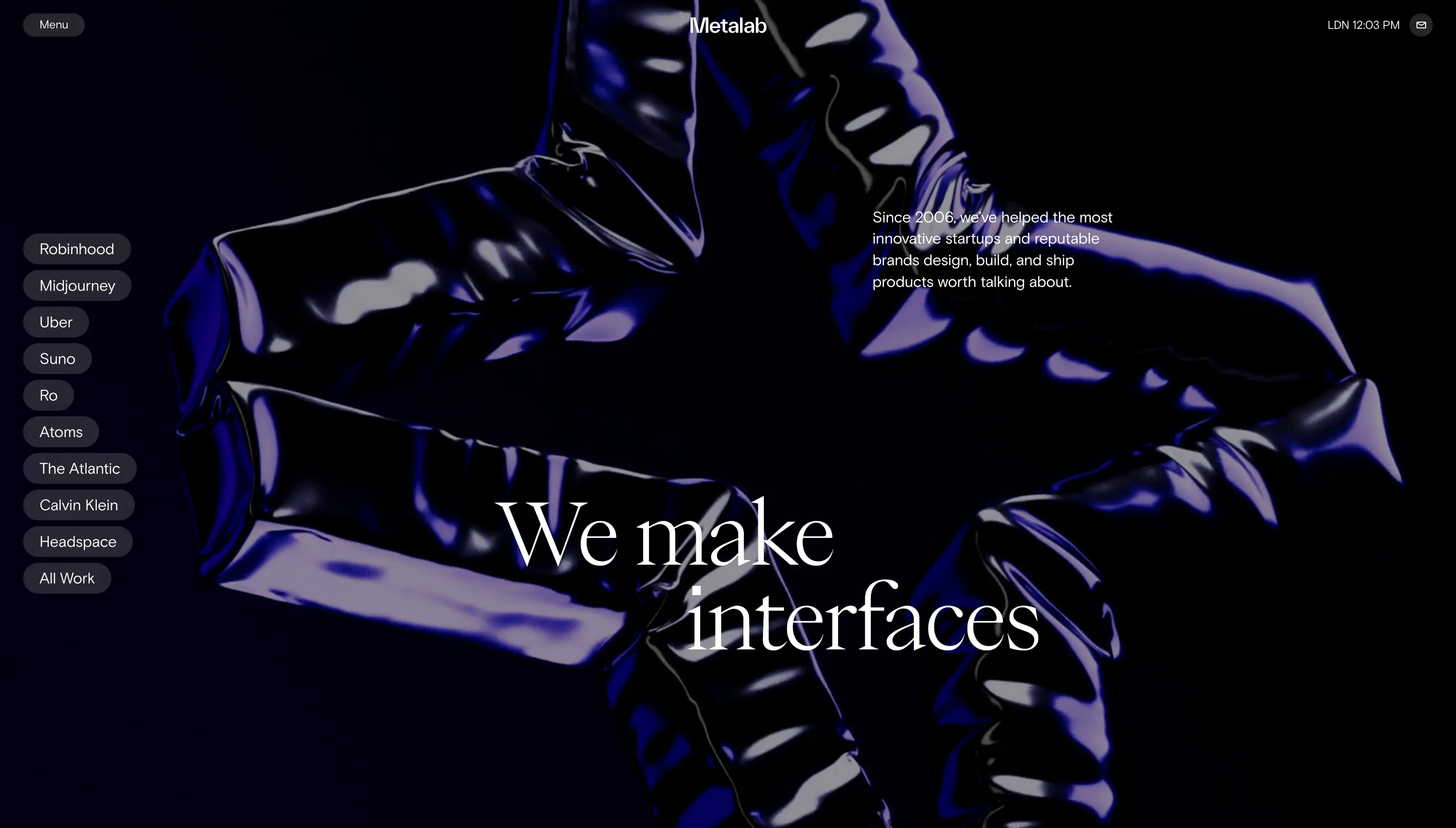
MetaLab excels at clean, opinionated design systems that make complex products feel effortless. Their teams translate brand principles into tokens, components, and documentation that accelerate multi‑team shipping.
Where MetaLab Excels
- Design system rigor: Figma libraries with clear governance for cross‑squad adoption
- Clarity over ornament: Expressive minimalism that scales well across states, edge cases, and breakpoints
- PM partnership: Close alignment with product leadership to map brand choices to growth goals
Ideal for: B2B SaaS and prosumer tools where velocity and maintainability matter as much as brand distinctiveness.
Clay
Best for: Scale‑ups and B2B companies seeking Silicon Valley‑style polish with mobile‑first sensibilities.
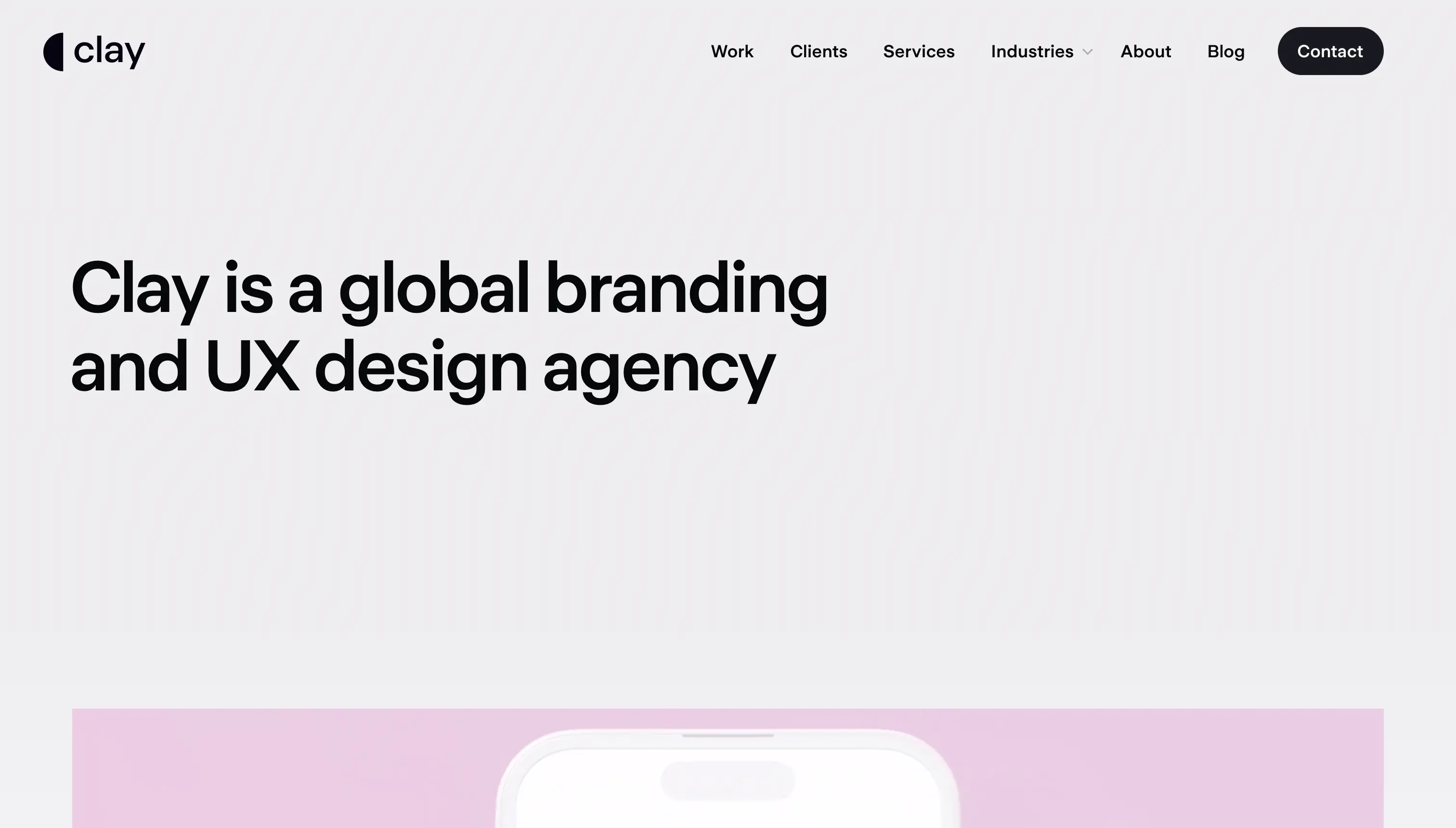
Clay blends product marketing acumen with interface craft, producing visual languages that convert across websites, apps, and sales collateral.
Clay's Strengths
- Mobile‑first systems: Components and patterns optimized for high‑frequency, on‑the‑go use
- Brand‑marketing alignment: Cohesive narratives across site, product, and demo environments
- Executive‑friendly artifacts: Clear rationale and artifact packaging for stakeholder buy‑in
Ideal for: Venture‑backed teams preparing for scale, where crisp storytelling and product cohesion are pivotal.
Work & Co
Best for: Enterprise and multi‑device platforms where design‑to‑development fidelity is mission‑critical.
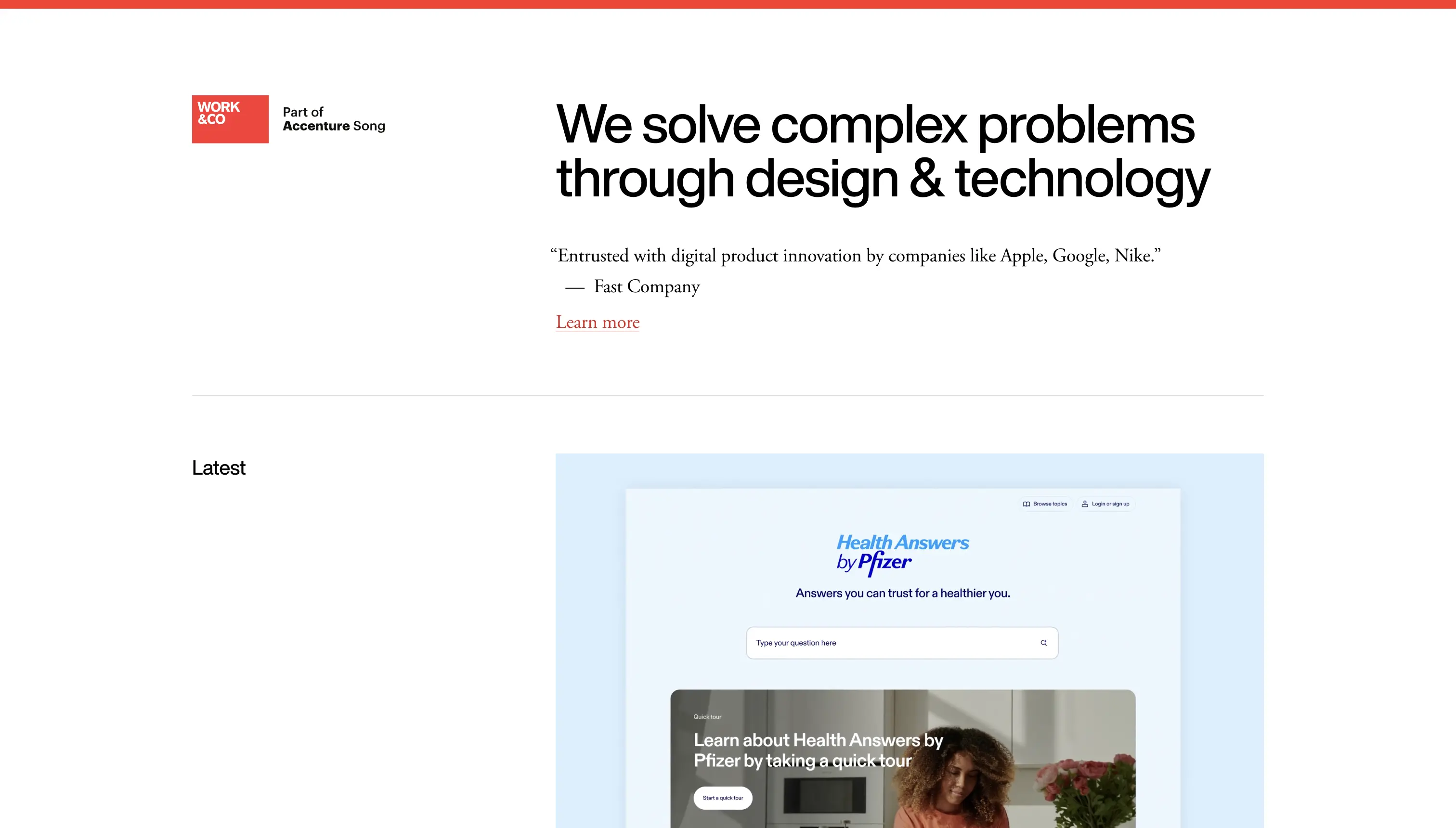
Work & Co is known for embedded product teams that ship. Their discipline ensures the brand system survives handoff—exactly as intended—across complex design and engineering stacks.
What Sets Work & Co Apart
- Hands‑on leadership: Senior designers and engineers work directly on the product
- Build‑ready outputs: Tokenized systems, accessibility specs, and implementation guidance
- Platform depth: Consistency across web, native apps, and in‑store or device interfaces
Ideal for: Fortune‑scale orgs and high‑traffic platforms where detail‑perfect execution compounds over time.
frog (Capgemini Invent)
Best for: Healthcare, enterprise, and emerging tech products requiring research‑backed brand identity integrated with service design.
frog (now under Capgemini Invent) was founded in Germany in 1969 — famously responsible for Apple's Snow White design language in the 80s. Today it's a 2,000+ person global consultancy with studios in SF, NYC, London, Bangalore, Singapore, and others. The Capgemini acquisition gave it enterprise reach; the trade-off is that it operates more like a consultancy than a boutique studio.
frog's Differentiators
- Service design integration: Journeys, touchpoints, and org operations inform the visual language
- Global reach: Multi‑region research and localization for consistency with cultural nuance
- Emerging tech fluency: Clear patterns for AI‑assisted and IoT experiences
Ideal for: Complex businesses where trust and clarity must be reinforced from onboarding to support.
UX Studio
Best for: Early‑stage startups and iterative teams needing research‑led brand alignment on lean timelines.
UX Studio is a 40-person team based in Budapest, founded in 2013, known for research-first methodology and unusually high client satisfaction scores (4.9/5 on G2, NPS of 97 equivalent). They're a good fit when complexity is high and internal stakeholders need evidence-backed design decisions — less about bold brand moves, more about clarity and defensible UX.
UX Studio's Strengths
- Lean discovery: Rapid interviews, usability tests, and concept sprints
- Brand‑UX linkage: Identity decisions grounded in core journeys and product value props
- Iterative engagement: Flexible scopes that evolve with product‑market insights
Ideal for: Founding teams seeking traction and clarity without enterprise overhead.
Focus Lab
Best for: B2B SaaS rebrands needing sprint‑based process and transparent pricing.
Focus Lab is out of Savannah, Georgia and has been the go-to rebrand partner for B2B SaaS companies for over a decade. They typically work with Series B+ companies, pricing runs $100K–$250K, and they carry a 4.9/5 G2 rating with an NPS of 97. Their process is structured around weekly delivery cadences with direct senior access — it's a very clean, predictable engagement.
Focus Lab's Advantages
- Sprint cadence: Structured timelines that drive alignment and reduce decision fatigue
- Stakeholder clarity: Naming, messaging, and visual identity artifacts built for internal rollout
- Transparency: Clear scope, pricing, and process documentation
Ideal for: Revenue‑stage SaaS updating market position ahead of funding or enterprise sales.
Lazarev
Best for: AI/Web3 startups moving from MVP to scale that need tech‑forward brand systems and high‑tempo iteration.
Lazarev is an 8-year-old agency that's carved out a niche in AI, fintech, and Web3 — specifically in making complex blockchain and data-heavy products feel approachable without dumbing them down. They focus on investor-ready brand identities and work primarily with venture-backed founders. Entry point is around $20K+.
Lazarev's Strengths
- Tech‑centric systems: Identity principles tailored to AI agents, data‑rich UI, and complex states
- Speed with rigor: Tight feedback loops for fast‑moving startups
- Clear entry point: Engagements typically start at a $20K+ minimum, aligning scope with ambition
Ideal for: Venture‑backed founders in AI/Web3 who need a bold, future‑facing identity that still reads as credible.
Service short description