

On top of visual polish, the best agencies for complex web app UX and architecture in 2026 combine research‑driven design, scalable engineering, and embedded collaboration. Whether you're building an enterprise SaaS platform, an AI‑driven marketplace, or a regulated healthcare app, choosing the right partner means shipping software that performs at scale, supports adoption, and creates long‑term business value.
This guide ranks about a dozen agencies excelling at the full stack of complexity: user research, information architecture, design systems, frontend/backend engineering, and measurable business outcomes.
What Is Complex Web App UX and Architecture?
Complex web app UX and architecture is the multidisciplinary practice of combining user‑centric research, scalable frontend/backend engineering, and system design principles to deliver seamless, high‑impact digital experiences. It goes beyond wireframes, it encompasses how data flows, how roles interact, how components scale, and how every user touchpoint connects to measurable business value.
Enterprise SaaS platforms, multi‑sided marketplaces, healthcare portals, and AI‑driven tools all share a common challenge: they serve multiple user roles, process large data volumes, and must remain performant and compliant as they grow. These products require agencies with research depth.
Research consistently shows that companies with strong UX investment outcompete the market and avoid costly information architecture mistakes.
Key disciplines that define this practice:
- User research and discovery — Stakeholder interviews, usability testing, jobs‑to‑be‑done mapping
- Information architecture — Role‑based navigation, taxonomy, content hierarchy
- Design systems — Centralized, reusable component libraries that enforce consistency across large products
- Scalable frontend engineering — React, TypeScript, component‑driven development
- Multi‑role B2B platform UX — Designing for admins, operators, end‑users, and integrations simultaneously
The agencies below have demonstrated mastery across these dimensions through documented case studies, client outcomes, and technical credibility.
Excited — Immersion‑First UX, Design Systems, and Outcome-driven design for Scaleups
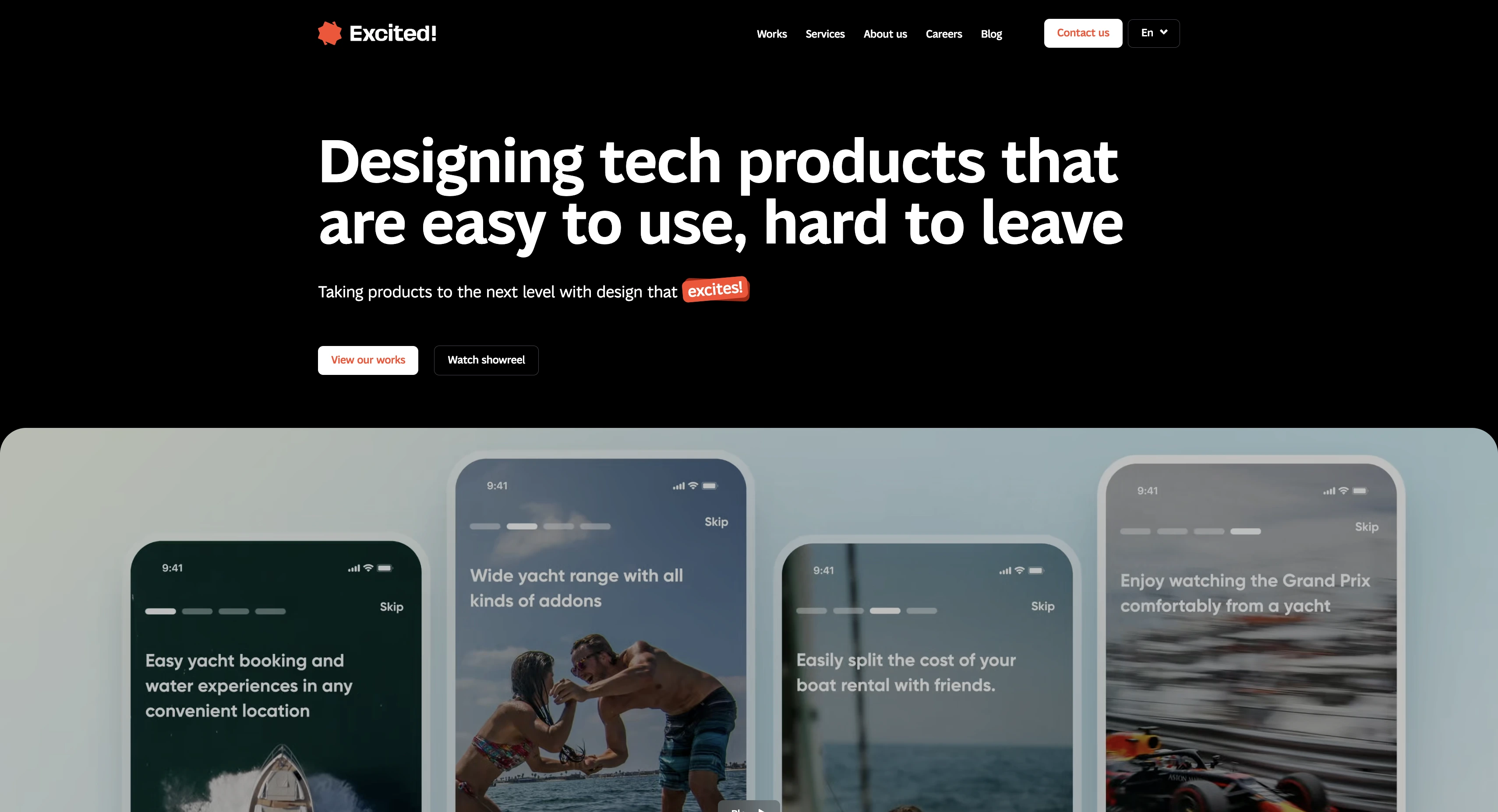
Excited is an immersion‑first digital product design agency that embeds directly with client teams to deliver end‑to‑end UX, scalable design systems, and Webflow engineering. Rather than operating as a vendor, Excited functions as an integrated partner, participating in sprints, stakeholder sessions, and product decisions alongside in‑house teams.
What Excited does:
- Product strategy — Translating business goals into product vision and feature prioritization;
- UI/UX design — Research‑led interface design for web apps, SaaS platforms, and B2B tools;
- Design systems — Building centralized component libraries that scale across large, multi‑role products;
- Motion and branding — Cohesive visual identity that carries through every product touchpoint;
- Webflow engineering — Production‑ready builds that bridge design and deployment.
Why Excited stands out for complex web apps: Excited's impact is visible in client outcomes: higher conversion rates, improved user retention, and stronger funding stories. Startups and tech‑driven scaleups working with Excited benefit from a team that immerses itself in the product, understands the business context, and aligns UX decisions with real technical constraints. That combination of design depth, strategic thinking, and technical fluency is rare among agencies at this price point.
Pricing: $50–$99/hr, with transparent, flexible engagement models suited to both project‑based and ongoing retainer relationships.
Ideal for: Startups and growth‑stage SaaS companies building complex web applications that need a true embedded partner—not a deliverable factory.
Key services: Web app design, UI/UX design, SaaS design, UX audits, mobile app design, healthcare design
Key takeaway: Excited delivers an immersion‑first partnership with design‑system expertise and Webflow engineering at a startup‑friendly price, making it ideal for growth‑stage SaaS teams that need both strategic UX and rapid, scalable implementation.
Bricx Labs — Design-Led UX and Systems for Complex B2B SaaS
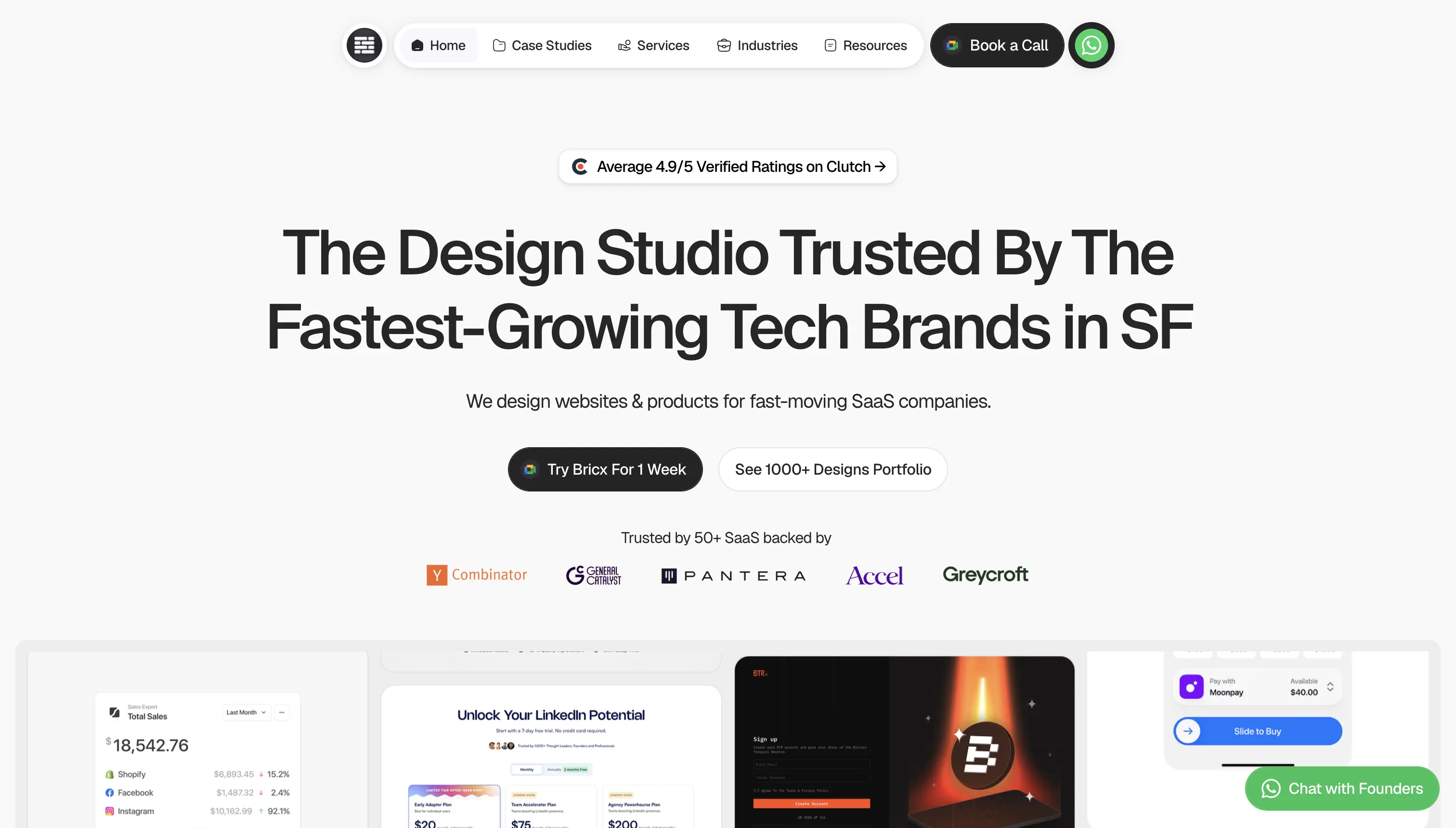
Why Bricx stands out: Bricx approaches complexity as an information-architecture problem before a visual one. The team maps dense workflows, admin panels, and multi-role permissions into clear, learnable interfaces, then layers on the visual craft its founders call design taste as a moat. The result is complex software that feels simple to use and looks premium, without stripping out the depth power users need.
What Bricx does:
- End-to-end product UX for complex, feature-dense SaaS platforms
- Scalable design systems that keep large products consistent
- UI design with a premium, conversion-focused finish
- Brand identity and marketing sites that match the product
- No-code build in Webflow and Framer for fast shipping
Pricing: Monthly retainers starting around $10,000, with hourly work in the $50–$99 range.
Ideal for: B2B SaaS scaleups with feature-heavy products that have outgrown their early UX and need both structure and polish.
Key services: Product UX, design systems, UI design, brand identity, no-code development.
Key takeaway: When a complex product needs to feel effortless and look premium at once, Bricx pairs architecture-first UX with standout visual craft, backed by 50+ SaaS engagements and a 4.9/5 Clutch rating.
UX Studio — Research‑Led UX for Complex B2B SaaS Platforms
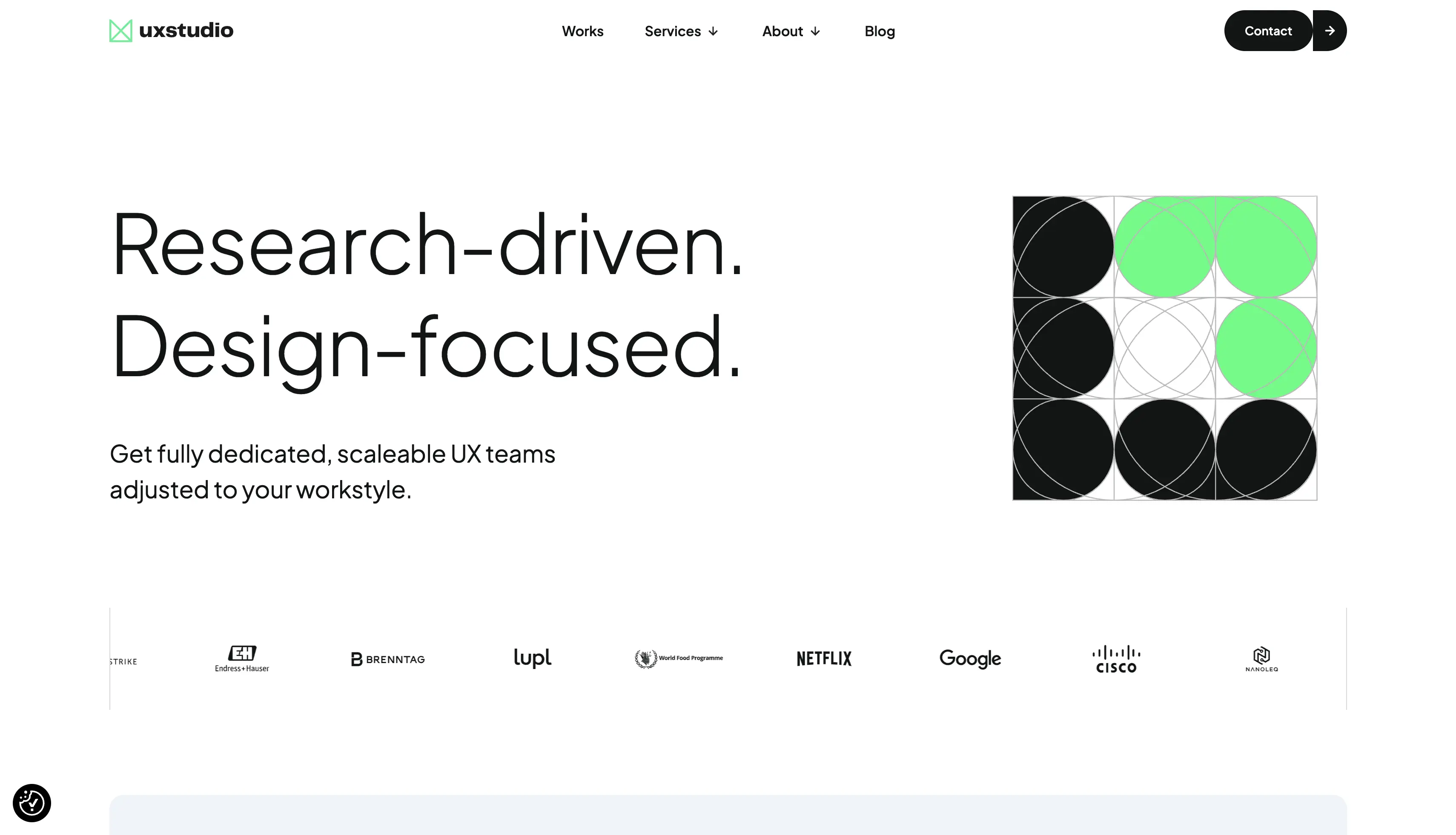
UX Studio specializes in discovery‑first design for complex multi‑role systems, with a particular strength in B2B SaaS platforms where user research and usability testing drive every design decision. Their process begins with deep investigation before a single wireframe is drawn.
Core methodology:
- Discovery and user research audits tailored for multi‑role enterprise products
- Dedicated researcher and designer roles—kept intentionally separate to preserve objectivity
- Usability testing cycles integrated throughout design, not just at the end
According to recent research, UX Studio houses 40+ specialists with over 10 years of experience, giving them unusual depth in complex usability challenges that smaller generalist teams can't match.
What makes them different: Separating the designer and researcher roles is a structural choice that delivers richer user insight, researchers aren't tempted to design toward conclusions, and designers receive cleaner behavioral data to work from.
Ideal for: Enterprise product teams building role‑heavy B2B platforms who want research to anchor every design decision.
Key takeaway: UX Studio’s dedicated research discipline and discovery‑first process ensure that complex B2B SaaS products are built on solid user insight before any visual design begins.
Neuron — Enterprise Workflow UX and Design Ops for Operational Complexity
Neuron focuses on B2B product UX where operational complexity is the central design challenge. They specialize in enterprise workflows, productivity flows, and design operations, including the governance structures that keep design systems coherent as organizations scale.
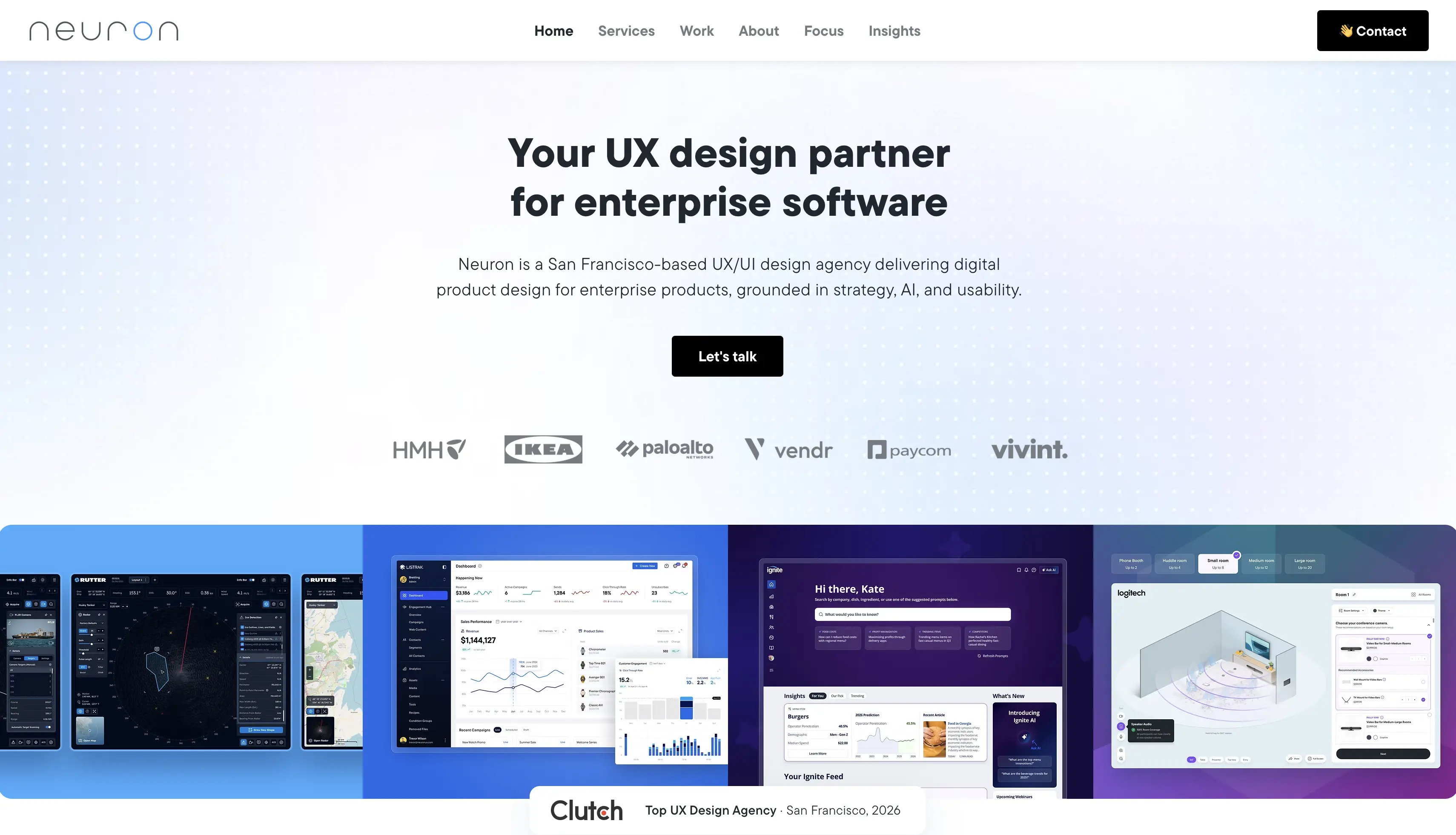
Notable clients: Hootsuite and Palo Alto Networks, both representing the kind of high‑complexity, multi‑stakeholder enterprise environments where Neuron's methodology shines.
Neuron's design ops approach includes:
- Design system governance — rules, ownership, and update protocols for large teams
- Workflow integration — ensuring design assets and documentation connect to engineering pipelines
- Productivity flow optimization — reducing friction in high‑frequency task sequences for power users
Ideal for: Enterprise product teams in workplace software, cybersecurity, or operational platforms where UX complexity stems from user volume and workflow density, not just visual design.
{{case-study}}
Frog — Global Service Design and Cross‑Channel Transformation
Frog operates at the intersection of product, brand, and service design—helping large organizations reimagine end‑to‑end experiences that span web apps, mobile, and offline touchpoints. Their programs often include research at scale, service blueprints, and implementation guidance across multiple teams.
Strengths include:
- Service design spanning multiple channels and user roles
- Enterprise‑grade research and facilitation to align stakeholders
- Transformation roadmaps that connect UX to operating models
Ideal for: Enterprises undertaking cross‑channel transformations where organizational change and UX must move in lockstep.
Key takeaway: Frog brings the scale and rigor needed to translate complex service ecosystems into coherent, measurable digital experiences.
{{{{service-card}}}}
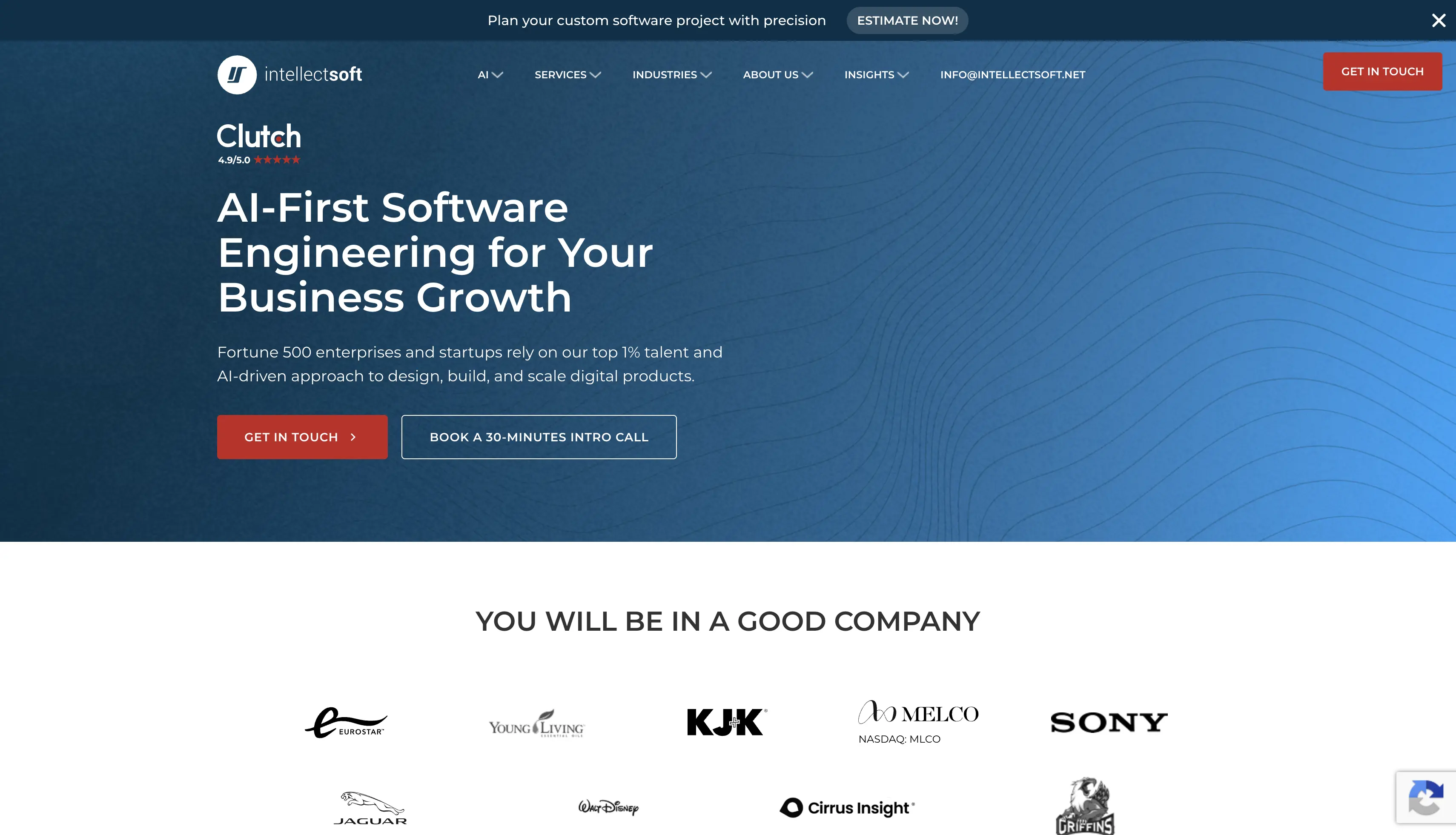
IntellectSoft — Regulated Industry Web Platforms
IntellectSoft focuses on platforms where compliance, security, and data integrity are just as important as UX. They combine enterprise engineering with domain expertise in sectors like healthcare and finance, where HIPAA/PHI handling, auditability, and risk management shape product decisions.
Where they excel:
- Designing for compliance constraints without sacrificing usability
- Secure architectures and integration patterns with legacy systems
- Documentation‑heavy environments where traceability matters
Ideal for: Healthcare, fintech, and other compliance‑heavy products that need robust architecture with clear UX around permissions, roles, and data governance.
Key takeaway: IntellectSoft is a strong fit when regulatory and security requirements drive product architecture as much as feature scope.
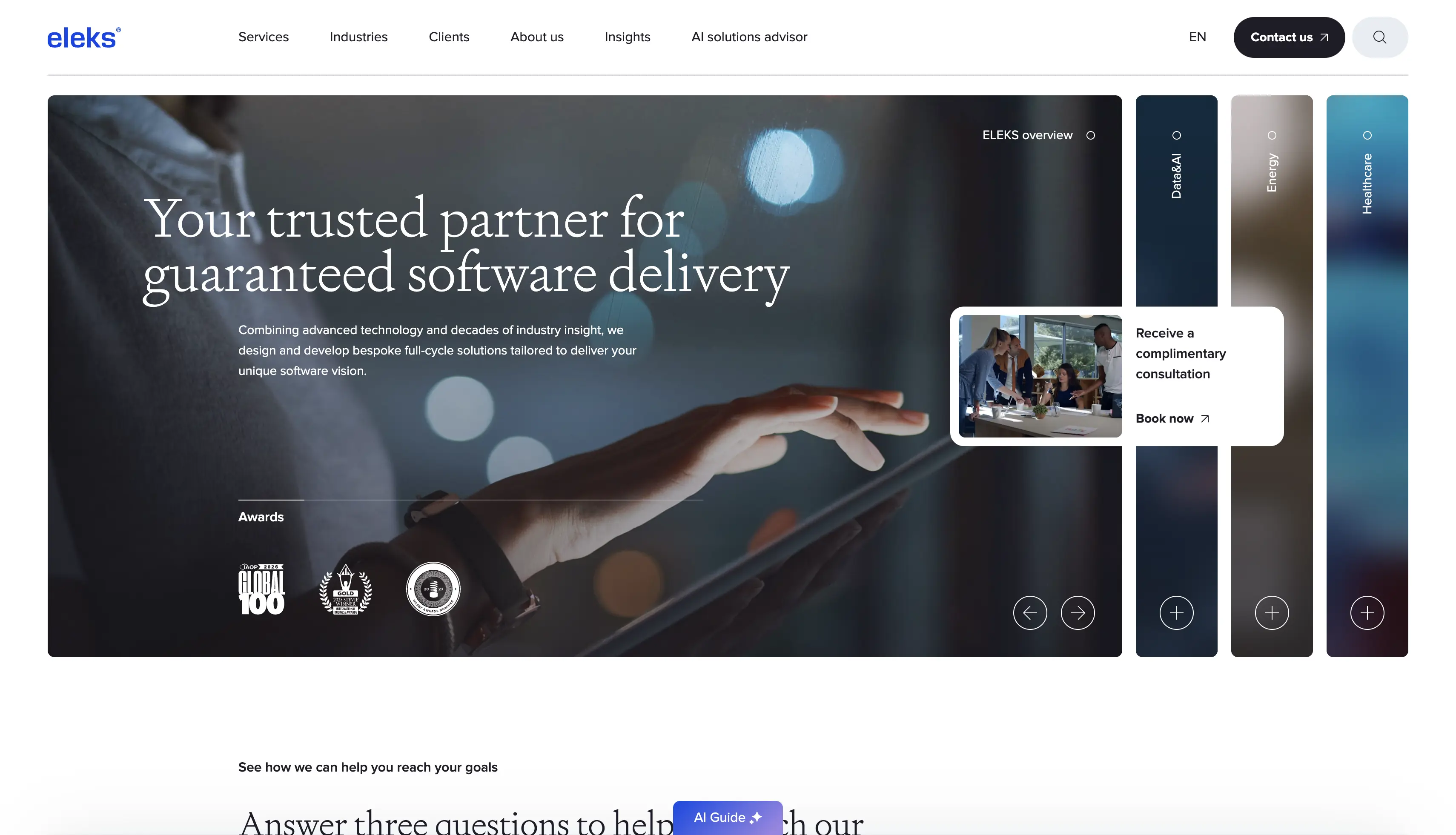
ELEKS — Legacy Modernization and Data‑Heavy Systems
ELEKS is known for untangling complex, legacy‑laden product ecosystems. Their teams modernize monoliths, introduce modular architectures, and improve data pipelines—while pairing UX design with measurable performance and reliability gains.
What stands out:
- System decomposition, API strategy, and microservice patterns
- Data visualization and interaction design for high‑volume datasets
- Migration roadmaps that minimize downtime and risk
Ideal for: Enterprises with entrenched legacy stacks and data complexity that need modernization without disrupting core operations.
Key takeaway: ELEKS pairs UX improvements with architectural upgrades to move complex, data‑heavy products forward safely and visibly.
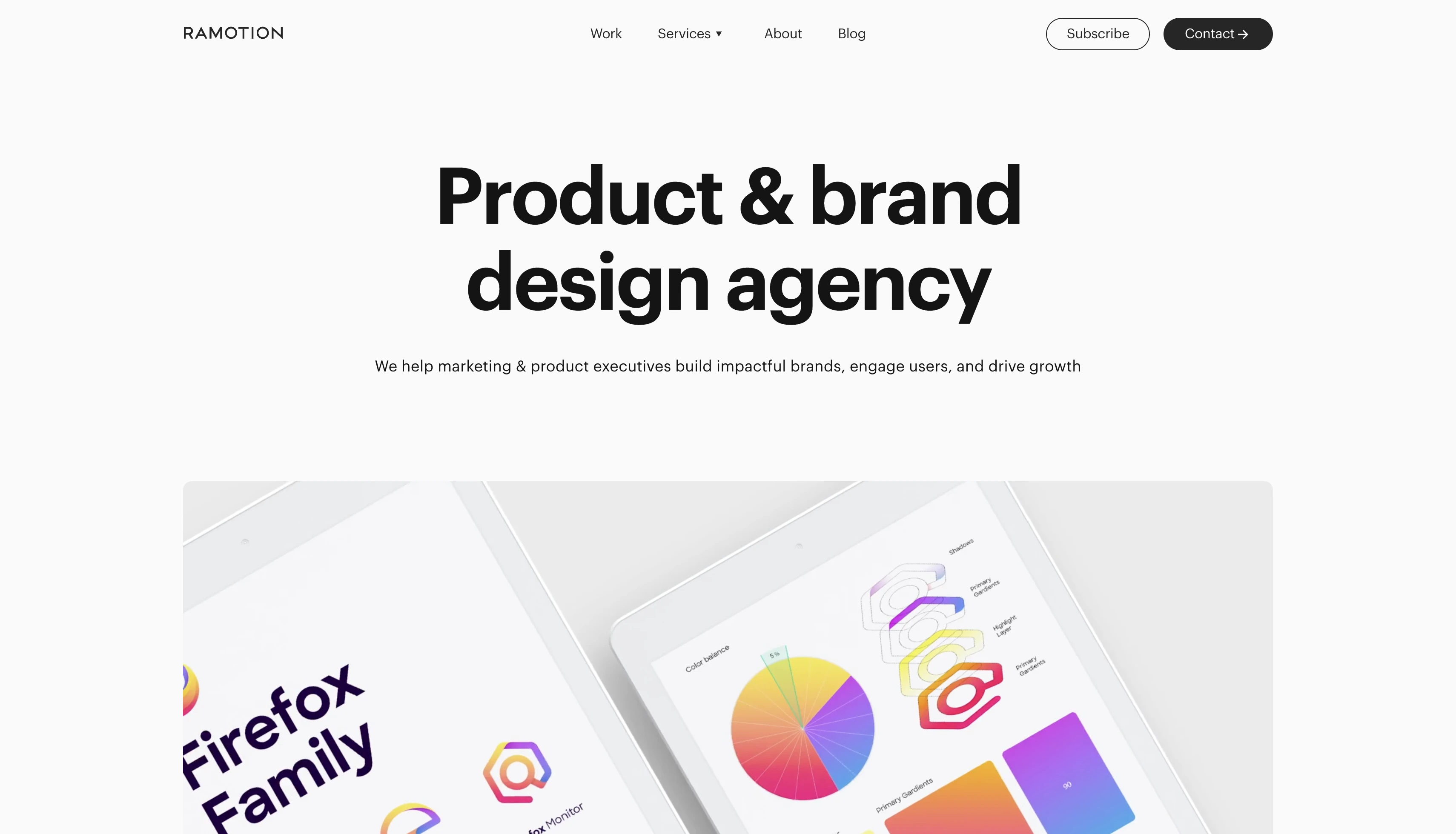
Ramotion — Senior Design and Brand‑Aligned Product Launches
Ramotion brings seasoned product designers who blend interface craft, brand systems, and motion to help teams ship polished applications. They’re especially effective for SaaS and consumer‑facing products where first‑impression quality impacts adoption.
Notable strengths:
- Design systems with strong visual identity and motion principles
- Launch‑ready UX/UI with attention to onboarding and adoption
- Product marketing alignment to support growth goals
Ideal for: SaaS teams seeking premium design craft and brand consistency, especially around major launches.
Key takeaway: Ramotion delivers senior‑level visual and interaction design that elevates product perception without losing usability.
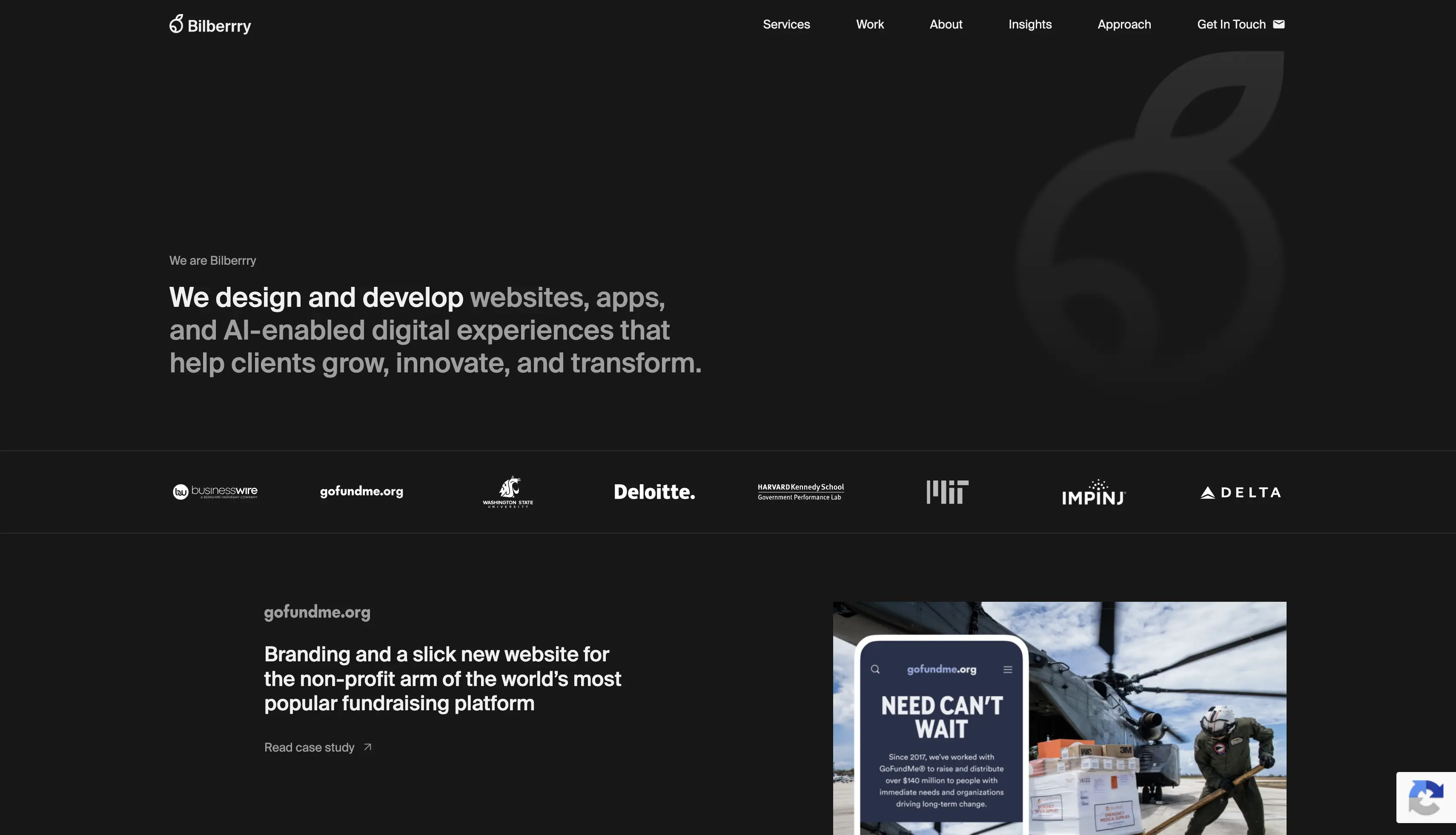
Bilberrry — Enterprise Web Design with Content Flexibility
Bilberrry focuses on content‑rich B2B platforms where complex information architecture, permissions, and editorial workflows matter. They often implement headless CMS patterns to separate content management from experience delivery.
Strengths include:
- Role‑based IA and modular content models
- Design systems that support marketing, product, and documentation hubs
- Scalable frontends that keep content performance high
Ideal for: Organizations needing flexible content operations across marketing sites, docs, and authenticated experiences.
Key takeaway: Bilberrry is a fit when content governance and multi‑property consistency are as critical as application UX.
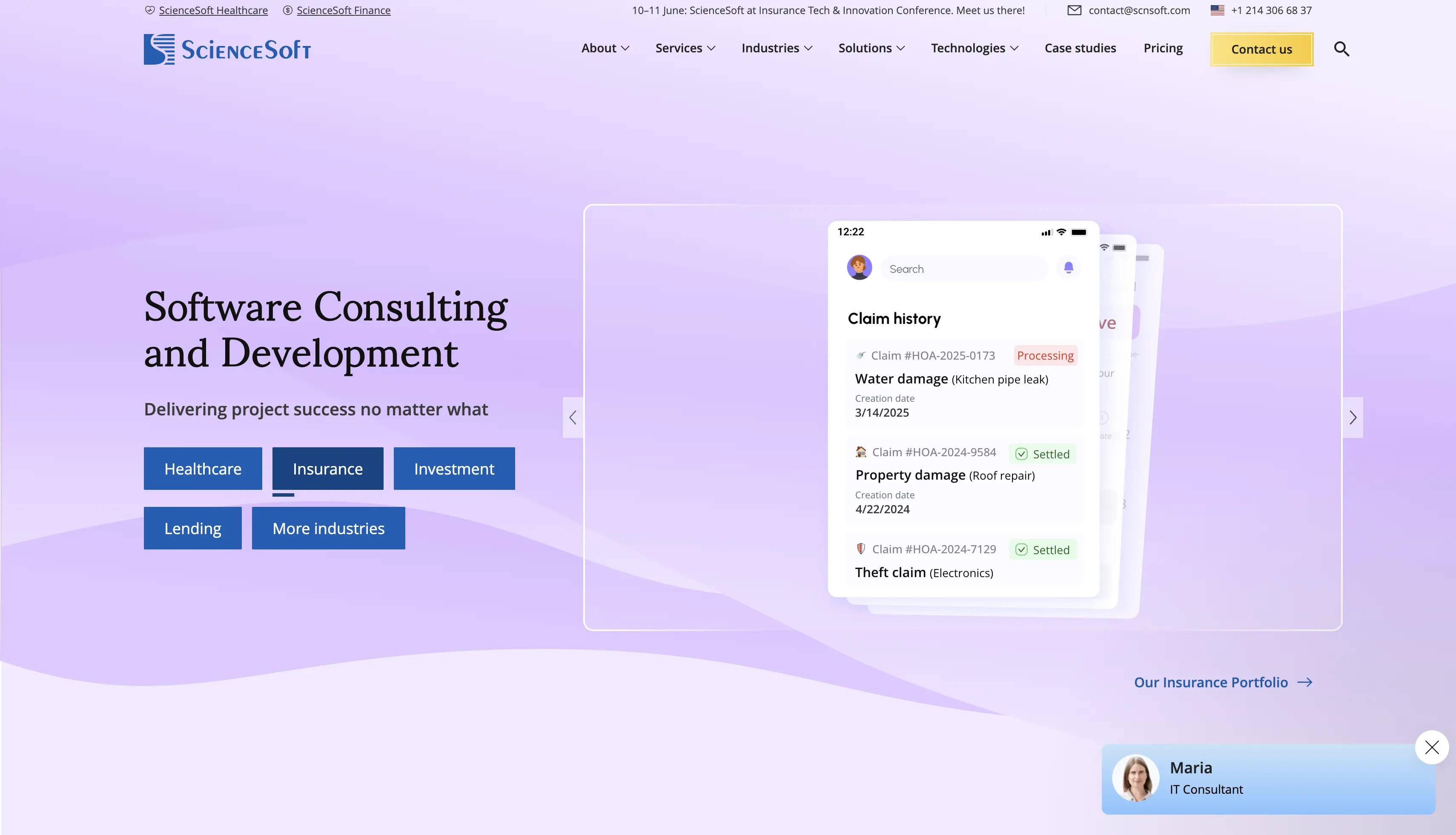
ScienceSoft — Consulting Heritage and Platform Modernization
ScienceSoft brings decades of consulting experience to platform overhauls, combining discovery, architecture, and delivery management for mid‑market and enterprise teams. Expect strong emphasis on reliability, integration, and long‑term maintainability.
Where they add value:
- End‑to‑end audits of UX, architecture, and delivery pipelines
- Gradual modernization plans that safeguard business continuity
- Documentation, SLAs, and knowledge transfer for enterprise IT
Ideal for: Organizations seeking a methodical, low‑risk partner to evolve mission‑critical platforms.
Key takeaway: ScienceSoft’s consulting depth makes them well‑suited to steady, governed modernization of complex products.
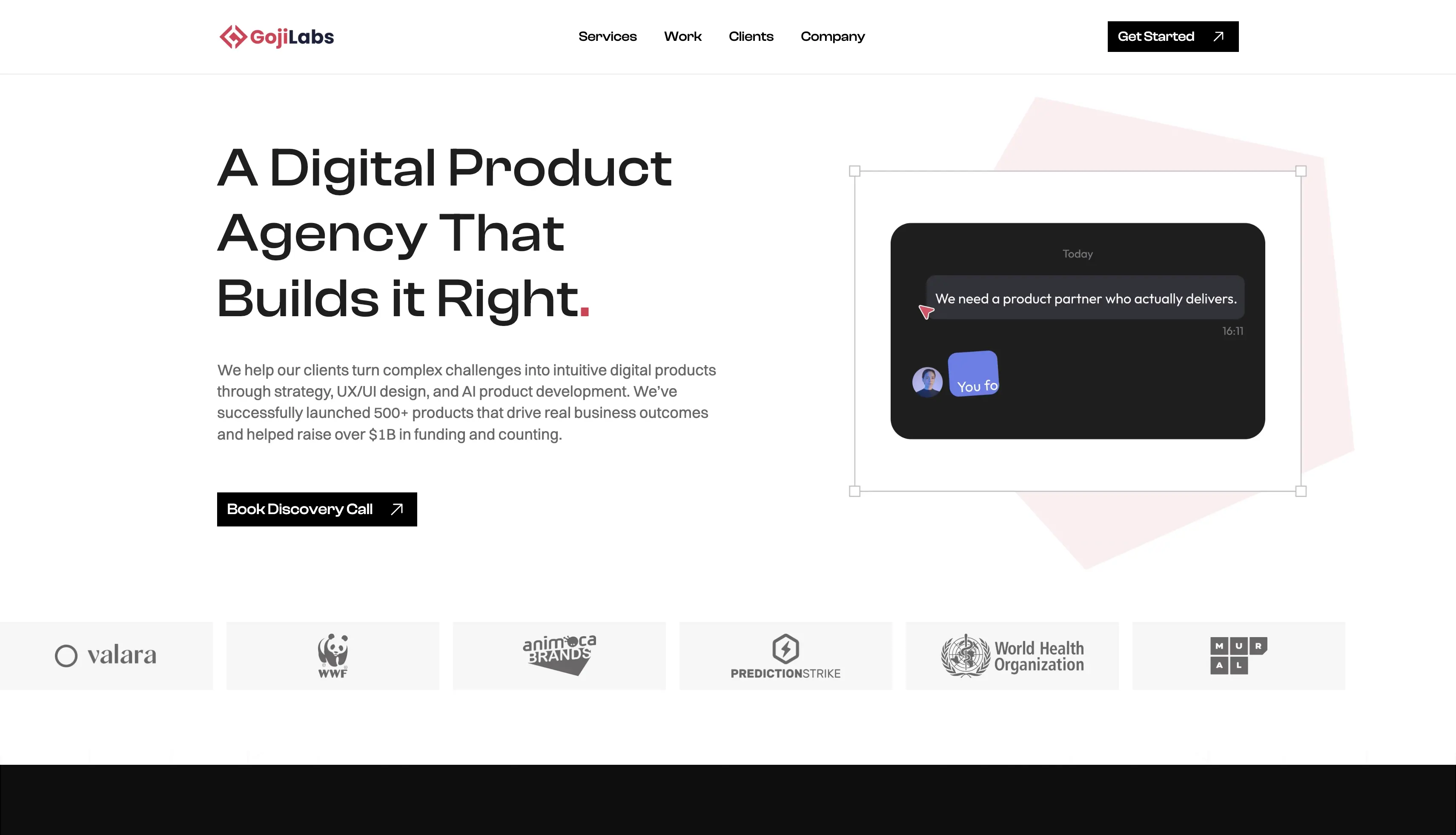
Goji Labs — Rapid MVPs and Product Strategy
Goji Labs emphasizes speed to learning—helping early‑stage teams validate concepts, scope MVPs, and iterate toward product‑market fit. Their approach keeps research and delivery tightly coupled to reduce waste.
Core advantages:
- Lean discovery and prioritization frameworks
- Rapid prototyping and usability testing loops
- Practical engineering to ship the smallest valuable release
Ideal for: Early‑stage startups or new product lines within larger companies that need clear signals fast.
Key takeaway: Goji Labs is built for momentum—get an MVP in users’ hands quickly, then refine with evidence.
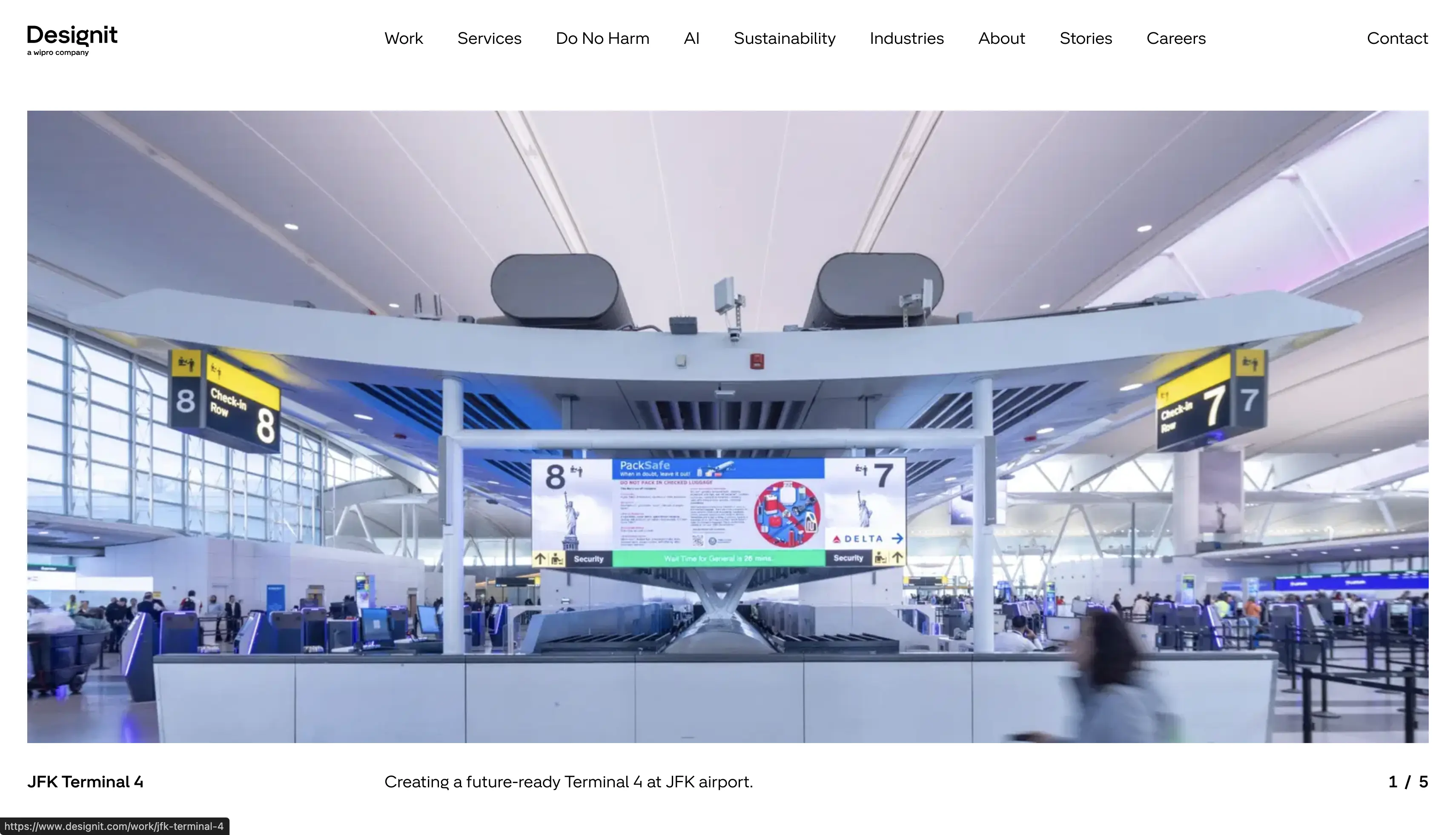
Designit — Service Design and System‑Level UX Transformation
Designit partners with enterprises to tackle system‑level UX challenges—spanning services, products, and organizational practices. They excel at aligning stakeholders around research insights and operationalizing change through design.
What they bring:
- Research‑backed service blueprints and experience strategies
- Change management and capability‑building alongside delivery
- Cross‑channel design to harmonize complex ecosystems
Ideal for: Organizations pursuing long‑term UX transformation where structure, process, and culture must evolve.
Key takeaway: Designit helps large orgs convert research and strategy into durable, system‑level improvements to UX and operations.
Service short description