

The best UX audit agency depends on your product type, your specific problem, and whether you need implementation support after the findings. This list focuses on agencies that work specifically with SaaS products, have documented SaaS methodology, and produce prioritized deliverables tied to product metrics rather than generic UI reports.
TLDR
Here's a quick comparison to help you navigate this article.
What Makes a SaaS UX Audit Rigorous
Not every "UX audit" is the same. For a SaaS product, a rigorous audit should include four components:
- Behavioral data review: Drop-off points, activation funnels, feature adoption mapped in your analytics tool before a single screen is evaluated.
- Heuristic evaluation: Expert review against established usability standards, with severity scoring on each finding.
- Flow analysis: Critical paths traced end to end — onboarding, activation, core workflow, retention triggers — with failure points identified.
- Prioritized fix list: Findings ranked by severity and effort, tied to a specific user behavior or metric, ready to hand to a PM.
If a provider skips the data review and goes straight to annotating screens, you are getting a design opinion, not an audit.
Excited — UX Audit Agency for B2B SaaS and Fintech
Disclosure: Excited is our agency. We have listed ourselves first. Our Clutch rating and client work are linked below so you can verify independently.
Excited is a product design agency focused on SaaS and fintech platforms. UX audits are a standalone service and the most common entry point before longer design engagements. The audit process starts with a behavioral data review in your analytics tool (Mixpanel, Amplitude, GA4, or equivalent), followed by heuristic evaluation, information architecture review, and a prioritized findings report presented in a working session with your team.
Every finding is tied to a user behavior or a product metric. Recommendations are sized by effort so you get a ranked action list, not a report your team has to re-prioritize themselves. Audits run four to six weeks. If the audit reveals problems that require design work, Excited can continue directly into that work without a second discovery phase.
Best for: SaaS products with low activation rates, onboarding drop-off, weak retention in subscription products, or complex B2B workflows with friction across multiple user roles.
See Excited’s UX Audit Service
{{case-study}}
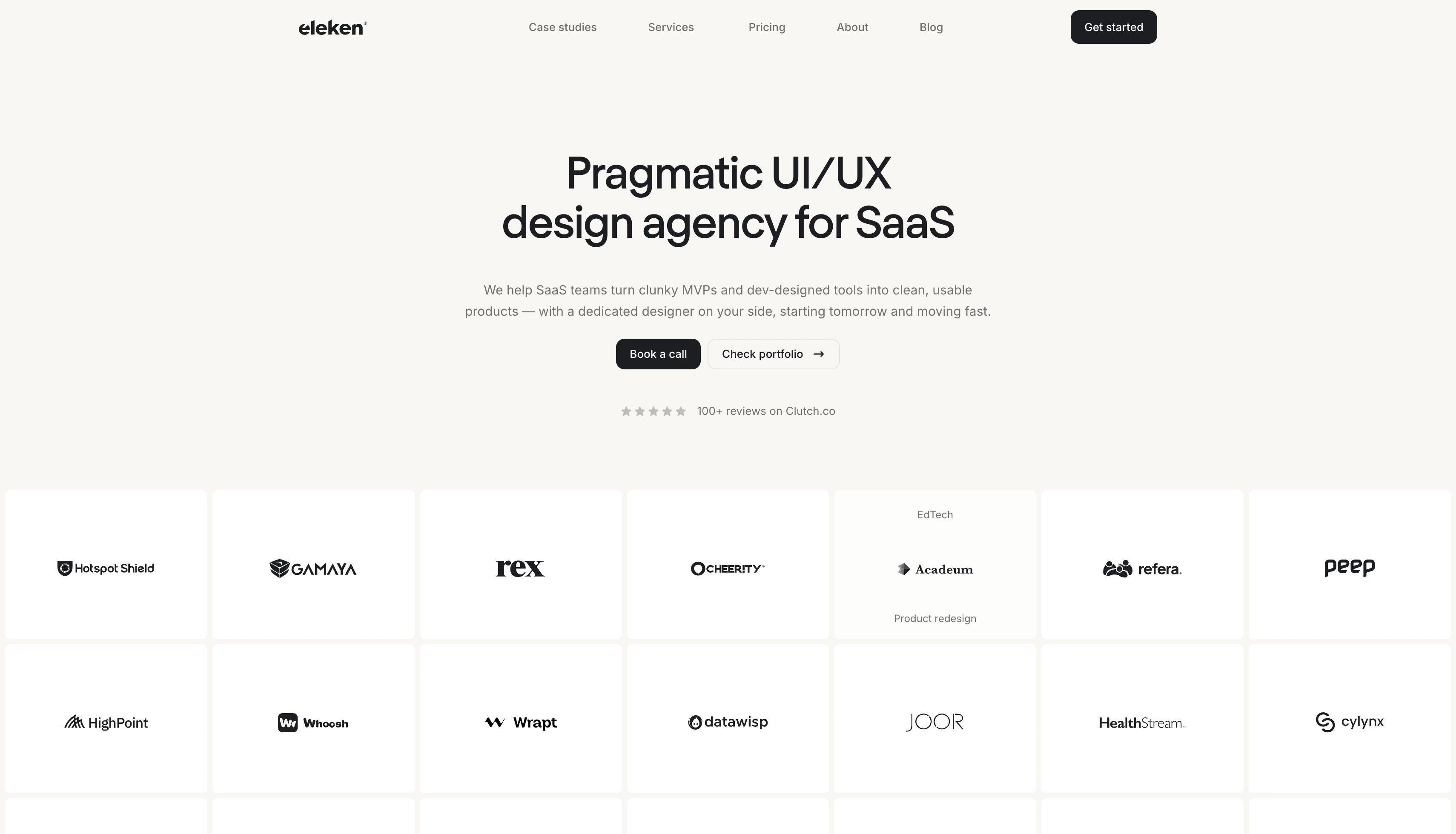
Eleken — UX Audit Agency for SaaS Products
Eleken is a UX design agency focused exclusively on SaaS, with over 200 products designed and audited since 2015. Their UX audit service combines heuristic analysis, behavioral data review, and competitor benchmarking. Designers work directly with clients without account manager intermediaries. The audit is included in the first phase of any redesign engagement and is also available as a standalone service.
Best for: SaaS subscription products where the audit is likely to lead into an ongoing design relationship.
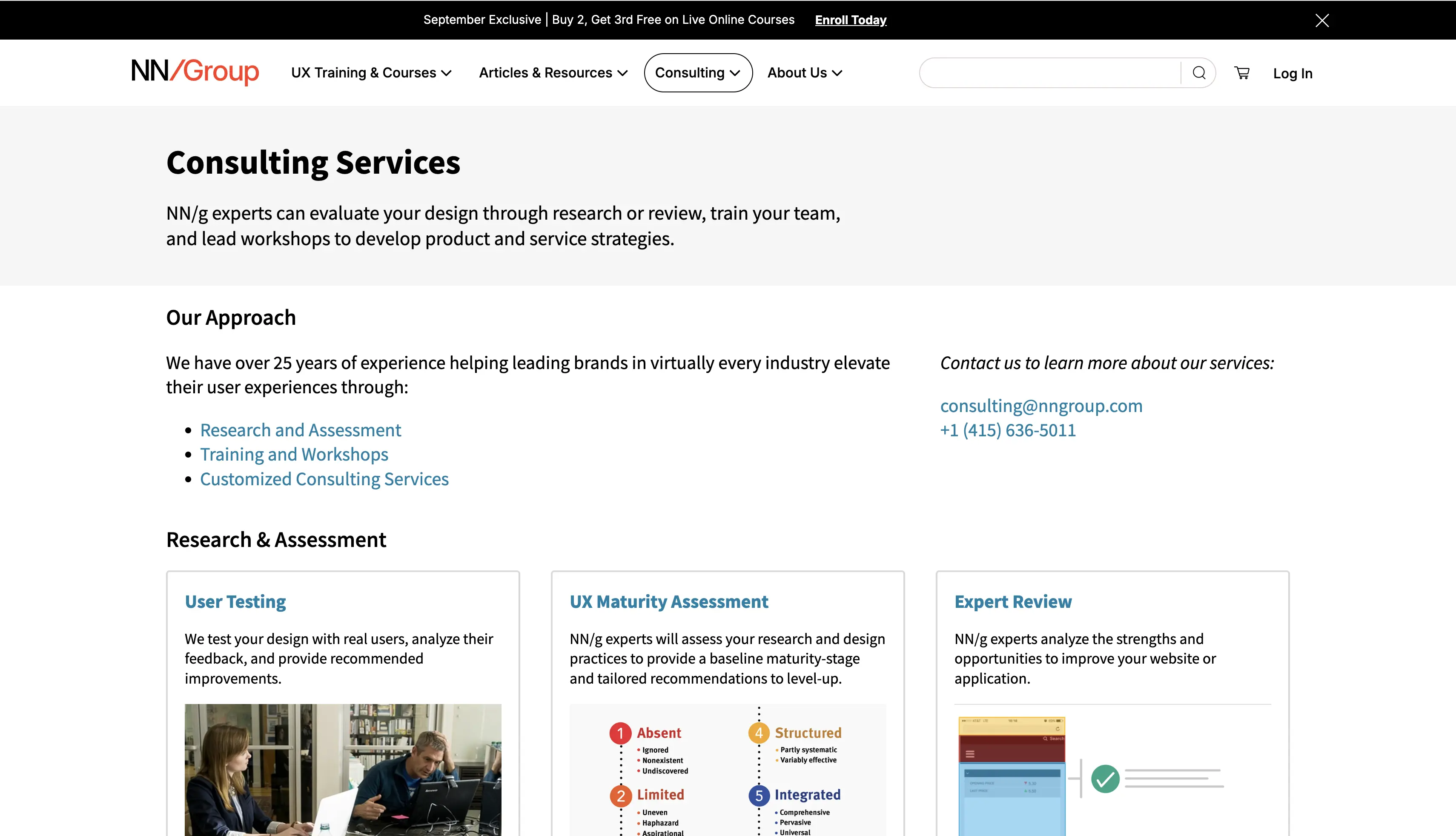
Nielsen Norman Group — Enterprise UX Audit Agency
Nielsen Norman Group is the reference point for evidence-based UX research. Their audit methodology is the most academically rigorous on this list, drawing on decades of usability research. Engagements are consultant-led and tend to be more expensive than product-focused agencies. The output is thorough and defensible, which matters in large organizations where design decisions require executive sign-off.
Best for: Enterprise organizations that need a research-heavy evaluation with institutional credibility, or teams facing internal resistance to design changes who need external validation.
Baymard Institute — UX Research and Audit for SaaS and E-commerce
Baymard Institute produces some of the most detailed UX research available, with a particular focus on checkout flows, subscription products, and SaaS onboarding. Their audit service applies their benchmark research database to your specific product, comparing your flows against patterns observed across thousands of tested sites. The output is data-heavy and well-documented.
Best for: SaaS products with complex checkout, billing, or subscription management flows where benchmarking against industry patterns is valuable.
{{{{service-card}}}}
UX Studio — Research-Led UX Audit Agency
UX Studio is a Budapest-based agency with a strong qualitative research orientation. Their audit process incorporates user interviews and usability testing alongside heuristic evaluation, which makes their findings more grounded in observed user behavior than a purely expert-led review. They work across SaaS, fintech, and healthcare products.
Best for: Teams that want user research as a core component of the audit, not just heuristic analysis, and whose product problems are rooted in misaligned user mental models rather than pure usability issues.
Qubstudio — Data-Driven UX Audit for SaaS and Fintech
Qubstudio is a Ukrainian agency with a conversion-focused audit methodology. Their process emphasizes analytics review, user flow mapping, and competitive benchmarking, with deliverables tied to business KPIs. They work primarily with SaaS, fintech, and healthcare products, and their audit outputs are structured around justifying redesign investments with documented evidence rather than subjective design feedback.
Best for: SaaS and fintech products where the audit needs to build a business case for a redesign investment, not just identify problems.
Donux — B2B SaaS Activation and Adoption Audit
Donux specializes in B2B SaaS products with complex workflows, role-based permissions, and multi-step onboarding sequences. Their audit approach combines product analytics, behavioral data, and benchmarking against SaaS usability standards. Deliverables include a severity-ranked issue list and a prioritized roadmap tied to activation and retention metrics.
Best for: B2B SaaS platforms where the core problem is activation or adoption, particularly products with multiple user roles or a long setup sequence before the user reaches the core value.
Musemind — UX Audit for Digital Products and Mobile Apps
Musemind is a design agency offering UX audit services for web, SaaS, and mobile products. Their audit process covers heuristic evaluation, user flow analysis, and accessibility review. Deliverables include annotated screen reports and a prioritized fix list. They have worked across e-commerce, SaaS, and consumer apps.
Best for: Teams that need a broad usability audit covering both desktop and mobile surfaces, or products with significant mobile traffic.
Goji Labs — UX Audit Agency for Startups and Digital Products
Goji Labs is a Los Angeles-based agency that offers UX audits as an entry point for startups and growing digital product teams. Their process is fast-cycle and practical, suited to teams that need actionable findings quickly without a multi-week research phase. They work across SaaS, consumer apps, and marketplace products.
Best for: Early-stage or growth-stage startups that need a rapid audit to prioritize their next round of design investment, particularly under a tighter budget.
Raftlabs — UX and Technical Audit for SaaS and Mobile
Raftlabs offers a combined UX and technical audit, which is useful when product problems span usability and engineering — slow load times, broken states, mobile-specific interaction failures. Their UX audit covers heuristic evaluation and user flow analysis, with the option to layer in performance and technical debt analysis.
Best for: SaaS or mobile products where the audit needs to surface both UX and technical issues in a single engagement.
How to Choose a UX Audit Agency for Your SaaS Product
Start with your specific problem, not agency size
“I need a UX audit” is not a brief. Before evaluating agencies, name the specific problem: low activation on step 3 of onboarding, high drop-off on the billing flow, a support queue full of questions about a specific feature. The more specific the problem, the easier it is to assess whether a provider has relevant experience.
Check their SaaS-specific methodology
Ask directly: how do you approach a product with multiple user roles and a 12-step onboarding sequence? If the answer is generic, their process probably is too. Agencies with real SaaS experience will have a specific answer about how they handle roles, permissions, and workflow complexity.
Verify the deliverable format before you sign
Ask to see a sample findings report. A 60-page document with 90 unsorted findings is not useful. The right deliverable is a severity-ranked list, each issue tied to a metric or user behavior, with a recommended fix and a rough effort estimate.
Separate the audit from the upsell
Most agencies offer audits as a pipeline to design work. That is fine, but make sure the audit stands alone as a complete deliverable. If they will not scope an audit without a redesign commitment, you are not getting an independent assessment.
Ask about post-audit support
If the audit reveals significant problems, who continues the work? A provider who can move directly into design using the audit as the brief saves you the cost of re-briefing a new team. Ask whether that path exists and what it looks like.
Service short description