

In 2026, iterative design is no longer optional for SaaS companies—it is the operating model that separates products that scale from ones that stagnate. Teams that commit to continuous improvement cycles consistently reach product‑market fit faster, reduce costly late‑stage rework, and build interfaces that users actually return to.

What Is Iterative Design for SaaS?
According to DesignRush, iterative design is user‑centric and feedback‑driven, used across UX, web, and product teams. It works through repeated cycles of prototyping, testing, and refinement rather than a single linear build‑and‑ship sequence. Each loop produces a measurably better product than the last.
For SaaS specifically, iterative design matters because software is never truly finished. Features ship, users behave unexpectedly, markets shift, and onboarding that worked for 100 users breaks at 10,000. Studios that embed rapid prototyping, frequent user testing, and structured feedback cycles into every engagement help founders stay ahead of those inflection points rather than scrambling to catch up.
This guide compares the leading iterative design studios of 2026—covering process depth, pricing, and ideal‑fit scenarios—with Excited highlighted as a standout partner for SaaS and AI startup founders seeking end‑to‑end strategic alignment and strong product‑to‑brand coherence.
Excited
Best for: SaaS and AI startups seeking a unified brand, UX, and product design partner from early stage through Series A and beyond.
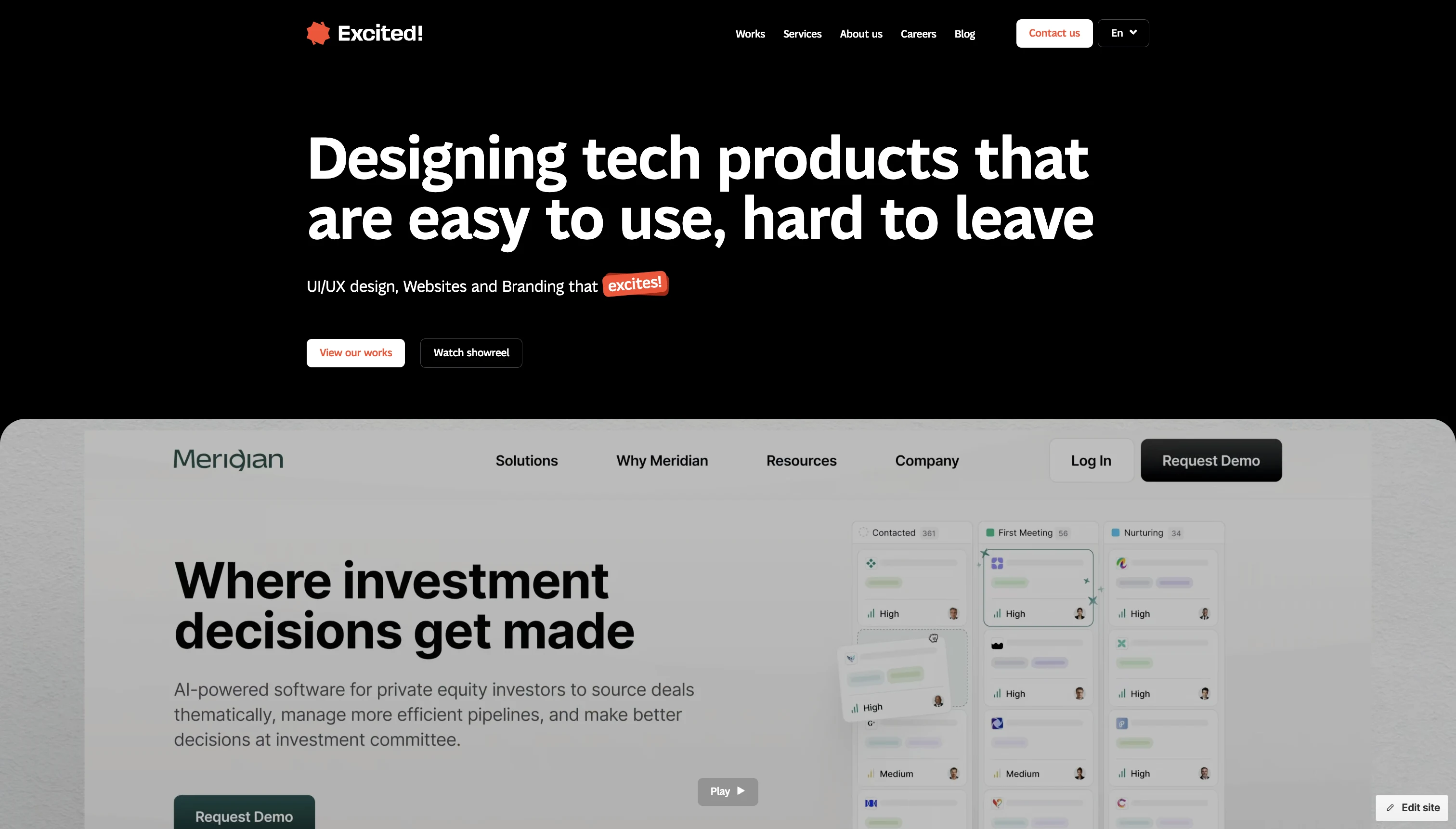
Excited is a full‑spectrum product design studio built specifically for SaaS and B2B digital products. Unlike studios that handle design in isolation, Excited unifies branding, UX/UI, and technical execution under one roof—reducing the handoff friction that can otherwise break strategic coherence between rounds of iteration.
Strategic coherence means aligning brand identity, user experience, and business goals so every design decision reinforces the product vision rather than fragmenting it. Excited operationalizes this principle across every engagement, ensuring that a landing page redesign, a dashboard overhaul, and a new onboarding flow all feel like expressions of the same product strategy.
Excited's iterative workflow maps directly onto proven design thinking principles: discovery and stakeholder research, hypothesis formation, rapid prototype development, user validation, and measured improvement before the next cycle begins. This structure means early‑stage founders get validated direction quickly, while scaling teams get design systems that hold up under real product load.
The studio has earned recognition from the Red Dot Award, iF Design Award, and Webby Awards—a rare combination that signals both craft quality and commercial effectiveness. For SaaS founders evaluating design partners, award wins across these three organizations indicate a studio that performs at the intersection of aesthetics, usability, and business outcomes.
Excited's responsiveness and partner‑oriented engagement model make it especially well‑suited to early‑stage and Series A founders who need a studio that moves at startup speed while maintaining the strategic depth typically reserved for larger agency relationships. Explore Excited's product design studio and brand identity approach for a deeper look at how the process works.
Key takeaway: End‑to‑end service (brand + UX/UI + technical execution), award‑winning quality, and a research‑driven iterative process make Excited a top choice for SaaS startups at any growth stage.
Key strengths at a glance:
Neuron
Best for: Enterprise and workflow‑heavy SaaS platforms requiring deep power‑user and admin UX expertise.

Neuron specializes in B2B workplace and enterprise SaaS design, with a particular reputation for handling complex admin workflows, permission structures, and multi‑role interfaces. According to The Masterly, Neuron's typical project size ranges from $50,000 to $150,000, reflecting the research intensity and stakeholder management their engagements require.
The studio's process emphasizes heavy upfront user research and structured stakeholder alignment—making it a strong match for platforms where getting the workflow architecture wrong would create significant downstream problems. Their iterative approach is methodical rather than rapid, trading speed for thoroughness.
DimensionNeuronMore Agile FirmsResearch depthExtensiveModerateAdmin/workflow UXCore strengthVariableIteration speedMethodicalFastPricing$50K–$150K$10K–$100KBest fitEnterprise SaaSEarly‑to‑mid SaaS
Neuron is the right choice when the product involves complex permission hierarchies, multi‑tenant dashboards, or enterprise buyers who demand governance‑level UX documentation alongside the design itself.
Key takeaway: Deep research‑driven methodology and expertise in complex admin/workflow UX make Neuron ideal for enterprise‑grade SaaS platforms.
{{{{service-card}}}}
UX Studio
Best for: Product teams that treat validated user research as the primary driver of design decisions.
UX Studio is a research‑first design partner that emphasizes concept validation and usability studies before committing to high‑fidelity design directions. This approach shortens the iteration cycle by surfacing high‑impact issues early, before those issues are baked into the product architecture.
Concept testing is the process of gathering early feedback on ideas or prototypes before broad implementation—a practice UX Studio embeds throughout every engagement rather than treating as a pre‑launch checkpoint.
Typical project pricing runs from $30,000 to $100,000, positioning UX Studio as accessible for funded startups and growth‑stage SaaS teams without the budget for enterprise‑scale research programs. The studio is particularly well‑suited for product teams that have already identified a usability problem but need rigorous research to identify the right solution before building it.
UX Studio is a strong fit when:
Key takeaway: Heavy emphasis on validated research and concept testing makes UX Studio perfect for teams that need data‑driven evidence to de‑risk major UX decisions and prioritize their roadmap.
Momentum Design Lab
Best for: Scaling SaaS products that need modernization, robust design systems, and measurable UX improvements across complex flows.
Momentum Design Lab focuses on product transformation for B2B and enterprise‑grade SaaS. Their iterative approach moves from diagnostic research and workflow mapping into rapid prototyping, then codifies learnings in scalable design systems that support ongoing delivery.
The team emphasizes service design and cross‑platform coherence—ensuring web apps, mobile experiences, and internal admin tools evolve in lockstep. Engagements often include analytics‑informed prioritization and A/B or multivariate experiments to validate design changes in production.
Momentum Design Lab is a strong fit when:
Common deliverables include:
Key takeaway: A strong choice for SaaS teams seeking repeatable systems, not just screens—balancing research depth with delivery‑ready design operations.
Orbix Studio
Best for: Early‑stage SaaS and feature teams that need fast, lightweight experimentation and market validation.

Orbix Studio runs lean, hypothesis‑driven cycles designed to surface signal quickly. Expect short discovery, low‑fidelity prototyping, and frequent user feedback sessions that converge on the simplest viable solution before investing in polish.
Typical engagements stack small, focused loops: a 1–2 week discovery to define hypotheses and success metrics, followed by rapid 1‑week prototype sprints with 5–7 user sessions to validate direction. The outcome is a prioritized backlog, clickable prototypes, and a lightweight UI kit teams can ship against immediately.
Orbix is a strong fit when:
Common deliverables:
Key takeaway: Ideal when you need small, fast loops to validate value propositions, onboarding, or new feature UX without overcommitting resources.
Stink Studios
Best for: Brand‑to‑product storytelling and high‑impact digital experiences that support launches and growth campaigns.

Stink Studios blends creative strategy with product‑adjacent UX to help SaaS brands express their value in market. Their iterative cycles emphasize concept exploration, creative testing, and performance insight—useful when marketing sites, in‑product education, and growth surfaces must work together.
For SaaS companies preparing major releases, Stink can translate complex product narratives into clear, conversion‑ready experiences without losing visual ambition. They pair brand craft with practical performance hooks so ideas can be measured, learned from, and scaled across surfaces.
Where Stink excels:
Typical outputs:
Key takeaway: Choose Stink when the brand narrative and interactive craft need to be as strong as the underlying product flows.
DotYeti
Best for: Cost‑effective, ongoing creative production to support iterative marketing and UI asset needs.

DotYeti's subscription model is built for steady output: landing page visuals, campaign graphics, lightweight UI updates, and design production that benefits from a consistent queue. While not a substitute for deep product strategy or research, the model supports rapid iteration on the surfaces users see most.
Expect a streamlined intake process (briefs, references, priority queues) and quick turnarounds on well‑scoped requests. Teams get the most value when they maintain a clear backlog, provide design systems and brand guidelines, and bundle feedback to minimize context switching.
Ideal use cases:
Not ideal for:
How to maximize value:
Key takeaway: A practical option for marketing‑heavy iteration where speed, predictability, and value matter more than complex UX problem‑solving.
ManyPixels
Best for: Consistent, reliable design throughput to feed growth loops, content programs, and UI polish.
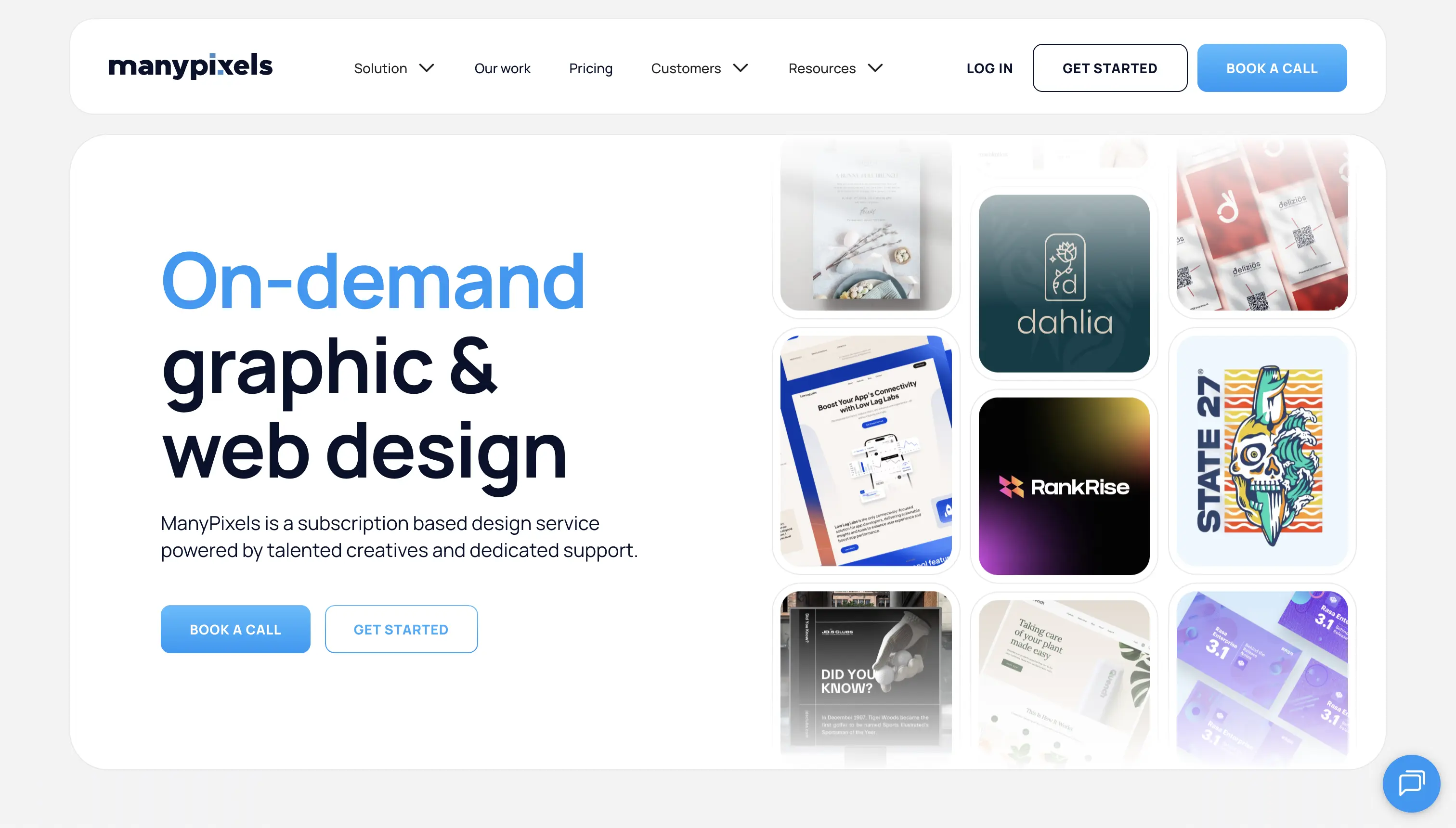
ManyPixels provides predictable turnaround for recurring design needs. It can accelerate iterative cycles on marketing pages, help centers, and UI accents when the product direction is already established and documented.
Subscribers typically work with a dedicated designer, enabling style familiarity over time and smoother alignment with your existing system tokens and components. Clear briefs, reference links, and acceptance criteria help maintain momentum and reduce rework.
Strong fit when:
Common outputs:
Key takeaway: Strong for production‑grade iteration at scale; pair with a strategic partner if you need research, IA, or complex workflow design.
IDEO
Best for: Strategic reframing and category‑level innovation powered by human‑centered research.
IDEO is synonymous with design thinking and complex problem‑solving. For SaaS organizations navigating new markets, service models, or multi‑stakeholder ecosystems, IDEO's research‑heavy process can align leadership, uncover latent needs, and chart a differentiated path before scaling into build.
Key takeaway: A premium fit for transformative initiatives where the biggest risk is building the wrong thing, not building slowly.
How to Choose an Iterative Design Studio for SaaS Innovation
The right partner depends on your goals, risks, and constraints. Start by clarifying:
- whether you need to validate a new concept or improve an existing product;
- how much user research and testing the project requires;
- whether you need a defined project scope or ongoing design support;
- which business and product metrics the work should influence.
Then shortlist studios whose strengths map directly to those needs and ask for case studies that show pre- and post-project outcomes, not just polished visuals.
Key Criteria for Evaluating SaaS Design Studios
Look for relevant SaaS experience, a clear research and iteration process, senior designer involvement, and the ability to work closely with product and development teams. The studio should also be able to explain how it measures design effectiveness and handles changing requirements.
Subscription Models versus Project-Based Engagements
Subscription models work well for teams that need a steady flow of improvements, new features, experiments, and design support without defining a new scope every few weeks.
Project-based engagements are better suited to clearly defined initiatives such as an MVP, redesign, UX audit, or new design system.
Many teams blend both: a strategic project to set direction and systems, plus a subscription stream to maintain iteration velocity.
The Role of Research and User Testing in Iterative Design
Effective iteration pairs insight with action:
- analytics and support data reveal where users struggle;
- interviews explain the motivations behind their behavior;
- usability tests validate proposed improvements before development;
- post-release metrics show whether the change produced the intended result.
The goal is to shorten the loop from observation to improvement while preserving evidence quality.
Pricing Expectations for SaaS Design Partnerships
Pricing scales with research depth, team seniority, and complexity:
- focused audits and discovery engagements usually have a defined scope;
- MVPs and redesigns are priced as larger, multi-stage projects;
- ongoing partnerships typically use a monthly retainer tied to team capacity.
Anchor your budget to outcomes: quantify the value of improved activation, conversion, or retention, and invest proportionally in the research and design needed to unlock it. This framing also aligns with how SaaS design engagements are commonly structured around discovery, flows, prototyping, high-fidelity UI, design systems, and ongoing support.
Service short description