

Hire a freelance designer when your MVP is small, clearly scoped and you can manage the work yourself. Hire a product design agency when the MVP has several user roles, complex flows or an investor deadline. Use vibe coding to build the first 80% fast, then bring in design for the last 20% that real users notice.
This used to be a two-way choice. Then vibe coding arrived. Collins Dictionary named it Word of the Year 2025, and tools like Lovable now start at $25 a month.
Reviewed by Oleksandr Perelotov, Co-Founder and Design Director at Excited. Disclosure: Excited is a product design agency for SaaS, fintech and AI startups, so we have a stake in this question. We say plainly below when an agency is the wrong choice.
Building screens is no longer the hard part. Founders now come to us with three new problems:
- “Our product looks like every other AI app.” Purple gradients, bento grids, generic dashboards.
- “The first 80% was easy, then it fell apart.” The prototype works, but flows, states and edge cases break with real users.
- “I can build it with AI. I just can’t make it look like ours.” Common among technical, AI-native founders.
This guide compares a freelancer, an agency and vibe coding against those three problems, not just on price.
How do a freelancer, an agency and vibe coding compare for an MVP?
The three routes differ most in who owns the product decisions. A freelancer executes your decisions, an agency challenges and shapes them, and a vibe coding tool builds whatever you prompt.
In 2026 they also differ in a newer way. The question is whether the result looks and works like your product, or like every other AI app.
| Factor | Freelance designer | Product design agency | Vibe coding |
|---|---|---|---|
| What you get | One designer’s screens and flows | Strategy, research, UX/UI, design system and handoff from one team | Working code generated from your prompts |
| Typical cost | From ~$20/hr on global marketplaces to $75–150/hr for experienced US designers | Excited: $50–$99/hr | From $25/month plus your own time |
| Typical timeline | Depends on one person’s availability | MVP design in 2–4 months; prototype-to-product sprint in 2–4 weeks (Excited) | Hours to days for a working demo |
| Looks like your brand, not “AI-made” | Depends on the designer’s taste | Brand and UI direction built for you | Defaults to the same patterns as every other AI app |
| Handles the last 20% (flows, states, edge cases) | Partly, if scoped in | Yes: the core of the work | Rarely without a designer |
| Keeps new AI-built screens on brand | Rarely | Tokens, components and a rules file for Cursor or Claude Code | Only if someone gives it a system |
| Main risk | Single point of failure | Higher upfront cost | Generic look, broken edge cases, insecure code |
| Best for | Small, well-scoped MVPs with a hands-on founder | Complex MVPs, investor deadlines, and vibe-coded prototypes that need to become real products | Validating an idea before you spend on design |
{{{{service-card}}}}
When does a freelance designer make sense for an MVP?
A freelance designer makes sense when the MVP has one core user flow and the founder can act as product manager. A freelance product designer is an independent designer hired directly to design screens and flows, usually without a supporting team.
Freelance designers win on cost and flexibility. Rates range from a $20/hr median on goLance to $75–150/hr for experienced US designers. You talk to the person doing the work, and you can scale them up or down week by week.
The risks of a freelance designer show up after the first month:
- One person, one point of failure. Illness, a better-paid project or a holiday stops your design work.
- Gaps outside their speciality. A strong UI designer may not run user research or write developer specs.
- You own the product decisions. A freelancer usually builds what you ask for, not what users need.
- Handoff varies. Some freelancers deliver clean components; others deliver screens developers must reverse-engineer.
A freelancer with strong taste can fix the “looks AI-made” problem on the screens they design. What a single freelancer rarely delivers is the system behind those screens: tokens, components and rules your AI tools can follow. Without that system, every new vibe-coded screen drifts back to generic.
A freelance designer is a good fit for a landing page plus a simple app, an internal tool, or a second pair of hands next to an in-house designer.
What does a product design agency add to an MVP?
A product design agency adds the decisions around the screens: what to build first, for whom, and how developers will build it. A product design agency is a team of designers, researchers and a project lead who take an MVP from idea to a developer-ready design.
An agency MVP engagement usually covers:
- UX strategy: user roles, core jobs and the smallest feature set worth launching
- Research and testing: interviews or quick usability tests before screens are final
- Brand and UI direction: a look that is yours, not purple gradients, bento grids and a generic dashboard
- UX/UI design: flows, screens and states, including empty, error and loading states
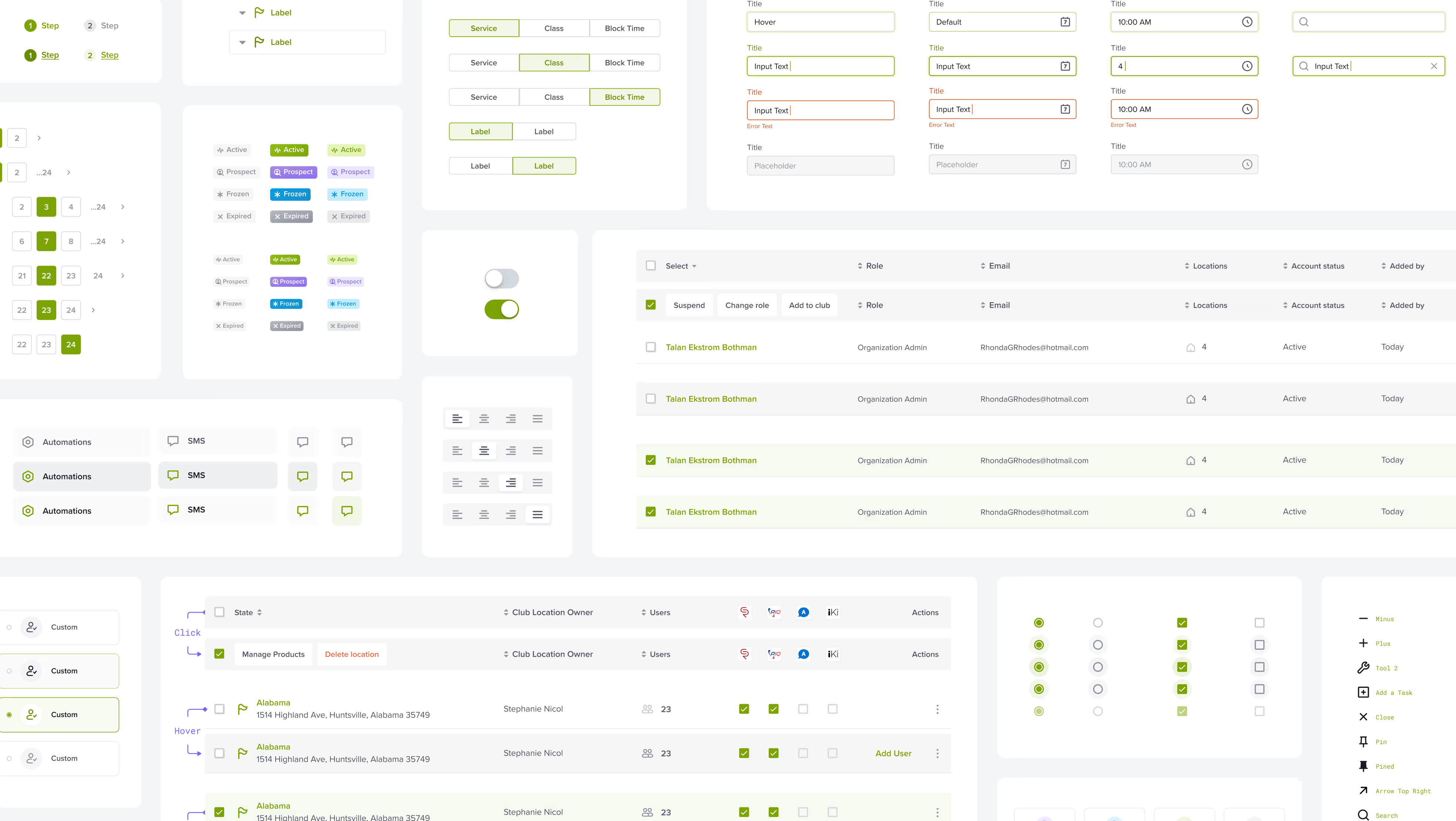
- Design system for humans and AI: tokens, components and a rules file your Cursor or Claude Code setup follows, so new screens stay on brand
- Developer handoff: specs and support while the build is underway
The trade-off is cost and pace. Excited works at $50–$99/hr, and a full MVP design from scratch typically takes 2–4 months. It pays off when a wrong product decision would cost more than the design budget.
The work is shorter if you already have a vibe-coded prototype. Excited treats the prototype as the brief. In a 2–4 week sprint, the team turns it into finished flows, states, a design system and a production site.
{{case-study}}
Excited is a product design agency for SaaS, fintech and AI startups. Founded in 2018 and based in Ukraine, Excited has delivered 100+ projects used by 15M+ people, with clients in 20 countries. See Excited’s SaaS design and AI product design services.
What is vibe coding, and what is it good for in an MVP?
Vibe coding is building software by describing what you want to an AI tool in plain language and letting it write the code. Andrej Karpathy coined the term in February 2025, and Collins Dictionary defines it as using AI prompted by natural language to write computer code.
Vibe coding tools such as Lovable, Bolt, v0 and Cursor are excellent at the first 80% of an MVP. They are useful when you need to:
- Test demand with a working landing page and sign-up flow
- Show investors a clickable demo instead of a slide
- Explore options by generating three versions of a flow in an afternoon
- Validate a workflow with five friendly users before paying for design

Vibe coding is also cheap to try. Lovable’s Pro plan costs $25 a month for 100 credits. For a founder with a hypothesis and a weekend, that is the fastest way to find out if anyone cares.
Where does vibe coding break down for an MVP?
Vibe coding breaks down in the last 20%, the moment real users start depending on the product. A vibe-coded MVP answers “can this be built?” It does not answer “should it work this way?” or “does it look like us?”
The common failure points:
- It looks AI-made. Without a brand direction, tools reach for the same defaults: purple gradients, bento grids, generic dashboards. The product blends in with every other AI app.
- No product decisions. The tool builds the flow you describe. If the flow is wrong, you get a polished version of the wrong thing.
- No system to stay on brand. Each prompt can produce new buttons, spacing and patterns. Without tokens and rules the AI follows, screens drift apart.
- Missing states and edge cases. Empty, error, loading and permission states are easy to forget in a prompt and costly to add later.
- Accessibility gaps. Contrast, focus order and screen reader labels are rarely checked unless you ask.
- Security risk. Generated code often looks finished but fails basic security checks.
For a demo, these gaps rarely matter. For a fintech, healthcare or B2B product handling customer data, they decide whether the MVP survives its first security review.
Can you combine a designer and vibe coding?
Yes, and for many startups the combination beats any single route. Vibe coding builds the first 80%, and a designer handles the last 20% plus a look and a system that are yours. The prototype stops being throwaway work and becomes the brief.
A typical combined route looks like this:
- Vibe-code the first 80%. Check that the problem is real and that people sign up.
- Hand the prototype over as the brief. A designer sees what you meant faster than any document could show.
- Run a “Does it look AI-made?” audit. Like a UX audit, it ranks the fixes that make the product look like yours, not like a template.
- Design the last 20%. Finished flows, empty and error states, edge cases and the brand direction.
- Turn the design into a system your AI tools follow. Tokens, components and a rules file for Cursor or Claude Code, so every new screen stays on brand.
- Ship production code with a security review before launch.

This is how design teams increasingly work. We cover the shift in From Figma to Production: How Designers Are Getting Closer to the Build. The founder keeps the speed of AI and still gets a product that holds together with real users.
How do you decide which route fits your MVP?
Answer seven questions. Most founders know their route by the third.
- Is the idea validated? If not, vibe-code a demo first and run a quick MVP test. Do not pay for design to test a guess.
- Do you already have a working prototype? If yes, you need the last 20%, not a full MVP design. A short sprint that uses the prototype as the brief is usually enough.
- Does it look like every other AI app? If people cannot tell your product from a template, you need a brand and UI direction. A designer can give you one; prompting alone rarely does.
- How many user roles does the MVP have? One role suits a freelancer. Admins, customers and partners in one product suit an agency.
- Does the product handle money, health or customer data? If yes, do not ship vibe-coded code to production without a security review.
- Who will make product decisions? If you have product experience and time, a freelancer can work. If not, you need a partner who will push back.
- Will you keep building with AI after launch? If yes, you need a system your AI tools follow: tokens, components and a rules file. Otherwise every new screen drifts off brand.
If your answers point to the last 20%, a distinct brand or a system for your AI tools, a product design agency is the safer choice. If they point to speed and validation, start with vibe coding and bring in a designer once users respond.
So who should design your MVP?
For most startups in 2026, the answer is not one route but two. Vibe-code the first 80% to prove the idea, then bring in a product design team for the last 20%: the flows, states, brand and system that real users judge. Hire a freelancer instead only if the MVP is simple and you can own every product decision yourself.
Match the route to where you are now:
- You have an idea, not a prototype: vibe-code a demo. Spend on design once people respond.
- You have a simple, one-role product and product experience: hire a freelance designer.
- Your prototype works but breaks with real users: hire a product design agency for the last 20%. Your prototype is the brief.
- Your product looks like every other AI app: you need a brand and UI direction, not more prompts.
- You build with AI and want every new screen on brand: you need a system of tokens, components and a rules file your AI tools follow.
AI made screens cheap. It did not make taste, judgement or systems cheap. That is what you are paying a designer for now.
If your MVP is stuck in the last 20%, book a call with Oleksandr Perelotov, Excited’s co-founder and design director, about a 2–4 week sprint that starts from your prototype. Or write to hello@excited.agency.
Doctori, the first licensed telemedicine app for online video consultations in Bahrain, partnered with our design team on a patient app redesign, a new doctor app and a design system.
Service short description
Frequently Asked Questions
Sources
Collins Word of the Year 2025: vibe coding
Veracode Finds First Meaningful Gain in AI Code Security Since 2025 as Average Pass Rate Hits 62%
UI/UX Designer on goLance vs. Upwork
Freelance UX Designer: How to Start, Rates & Tools (2026)
Artificial Societies case study, Excited
From Figma to Production: How Designers Are Getting Closer to the Build