

It’s one of the most common startup stories we hear as a design agency.
A digital product launches. It gains traction. Features pile up. Deadlines get tighter. Then, at some point, the team realizes the experience feels harder to use than it should. Flows are inconsistent, interfaces feel patched together, and users start struggling with tasks that used to be simple.
That’s when UX debt shows up.
Like technical debt, UX debt accumulates quietly. Small compromises, rushed decisions, and postponed fixes eventually compound into a noticeable drag on the product’s usability, development speed, and business performance.
This guide explains what UX debt is, why it matters, how to identify it, and how teams can manage and reduce it without slowing down growth.

What design debt is and why it matters
UX debt refers to the accumulation of design and usability issues that negatively affect the user experience over time. It often results from prioritizing speed over quality, skipping validation, or building new features on top of outdated design decisions. Let's break it down UX debt in more detail.
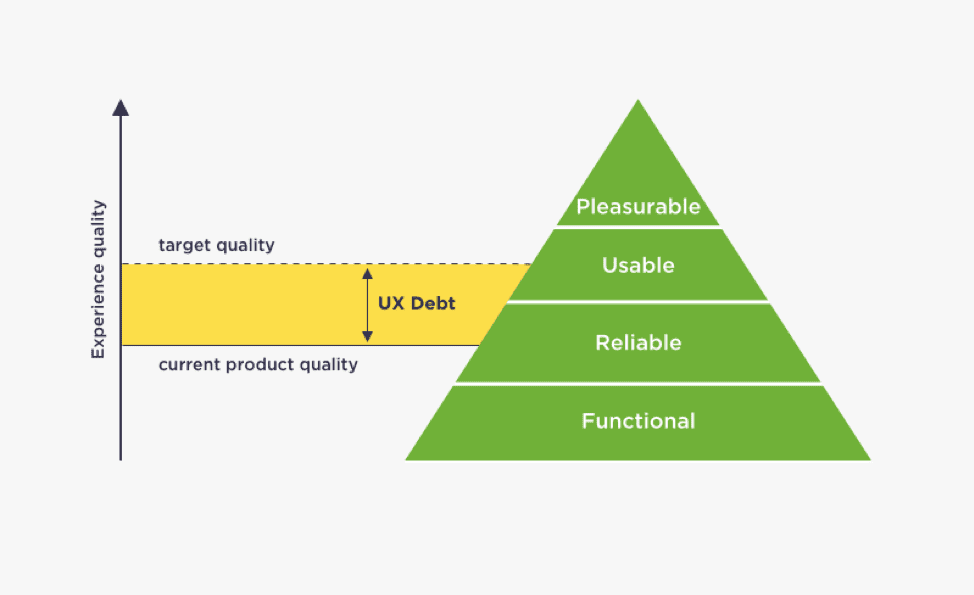
How UX debt impacts user experience
As UX debt grows, the experience becomes harder to use and harder to maintain. And, most importantly, impossible to scale.
Common symptoms include increased UX friction, where users need more time and effort to complete tasks. Flows feel unintuitive, interactions behave inconsistently, and cognitive load increases. This often leads to more support tickets, user confusion, and repeated questions that indicate something in the interface is unclear.
Over time, poor usability directly affects user satisfaction and retention. Users may tolerate friction early on, but as alternatives emerge, frustration becomes a reason to churn.
{{case-study}}
Why UX debt grows over time
UX debt rarely appears all at once. It builds gradually.
Quick fixes that solve immediate problems are often left in place permanently. Legacy designs remain untouched because replacing them feels risky or time-consuming. Priorities shift toward shipping new features, while cleanup work keeps getting postponed.
Without intentional effort, UX debt becomes the default state. This creates a vicious cycle of piling new features on top of a shaky foundation.
{{{{service-card}}}}
Cost of UX debt for product teams
For product teams, UX debt increases maintenance costs and slows down development cycles. Engineers spend more time working around inconsistencies. Designers struggle to extend systems that were never designed to scale. In other words, with time, the development and design constraints become more and more absurd.
Ultimately, UX debt reduces product competitiveness. Features take longer to ship, quality declines, and the experience falls behind user expectations. Bad desicios accrue, and you have to carry that baggage indefinitely.
Common causes of UX debt
UX debt is rarely caused by a single decision. It usually stems from systemic issues in how products are designed and built. Let's break down some of the reasons we see the most, as a UX agency.
Design system inconsistencies
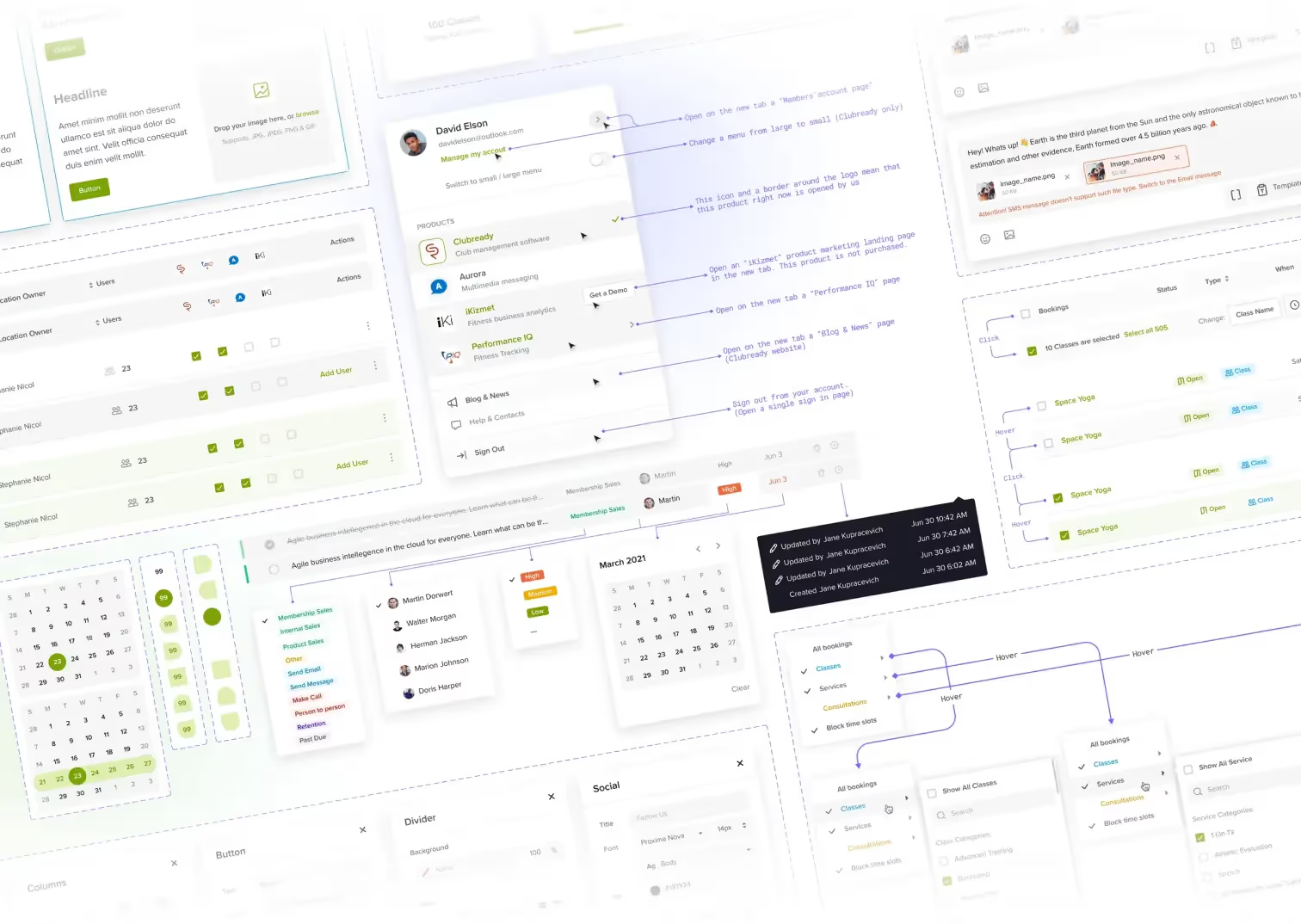
Inconsistent or incomplete design systems are a major contributor. Duplicate components, mismatched styles, and missing rules create fragmentation across the interface. Without clear standards, each new feature introduces more variation.
Maintaining a proper design system becomes even more important, whenever you have a large design team. The way components are used needs to be consistent across all modules and teams. This consistency should extend to branding basics too, teams that create logos and other core visual assets within the same system tend to avoid one more source of drift down the line.
Rushed releases and sprint pressure
Tight deadlines often force teams to compromise on UX decisions. Testing gets reduced, edge cases are ignored, and short-term solutions replace thoughtful design. Over time, these compromises accumulate into debt.
Sometimes, speed indeed is the priority. However, it's important to realize that this MO cannot become your default. The longer debt accrues, the most painful the eventual fixes.
Backlog priorities and poor planning
UX tasks are frequently deprioritized in favor of feature delivery. Without clear ownership or proactive planning, UX improvements become reactive responses to user complaints instead of intentional design work.
How to identify UX design edbt
Identifying UX debt requires stepping back and evaluating the product holistically, not just screen by screen. Here are a few solutions that we've uncovered over the years.
Reviewing design patterns across screens
Comparing patterns across the product helps reveal inconsistencies. Repetitive mismatches, divergent components, and differences between legacy and newer screens are strong indicators of accumulated debt.
Spotting usability issues and friction
Analyzing failed user paths and error-prone interactions exposes friction points. High cognitive load, unclear labels, and confusing flows often signal deeper structural issues rather than isolated problems.
Mapping new features and hidden debt
New features can hide debt underneath. When functionality is layered on top of outdated UI or patched into existing structures, design shortcuts become harder to see but more costly to fix later.
How to manage UX debt effectively
Managing UX debt starts with acknowledging it as an ongoing responsibility, not a one-time cleanup task.
Prioritizing improvements based on impact
Not all UX debt is equal. Teams should prioritize fixes based on user value, severity, and visibility. High-impact areas that affect critical journeys deserve attention first.
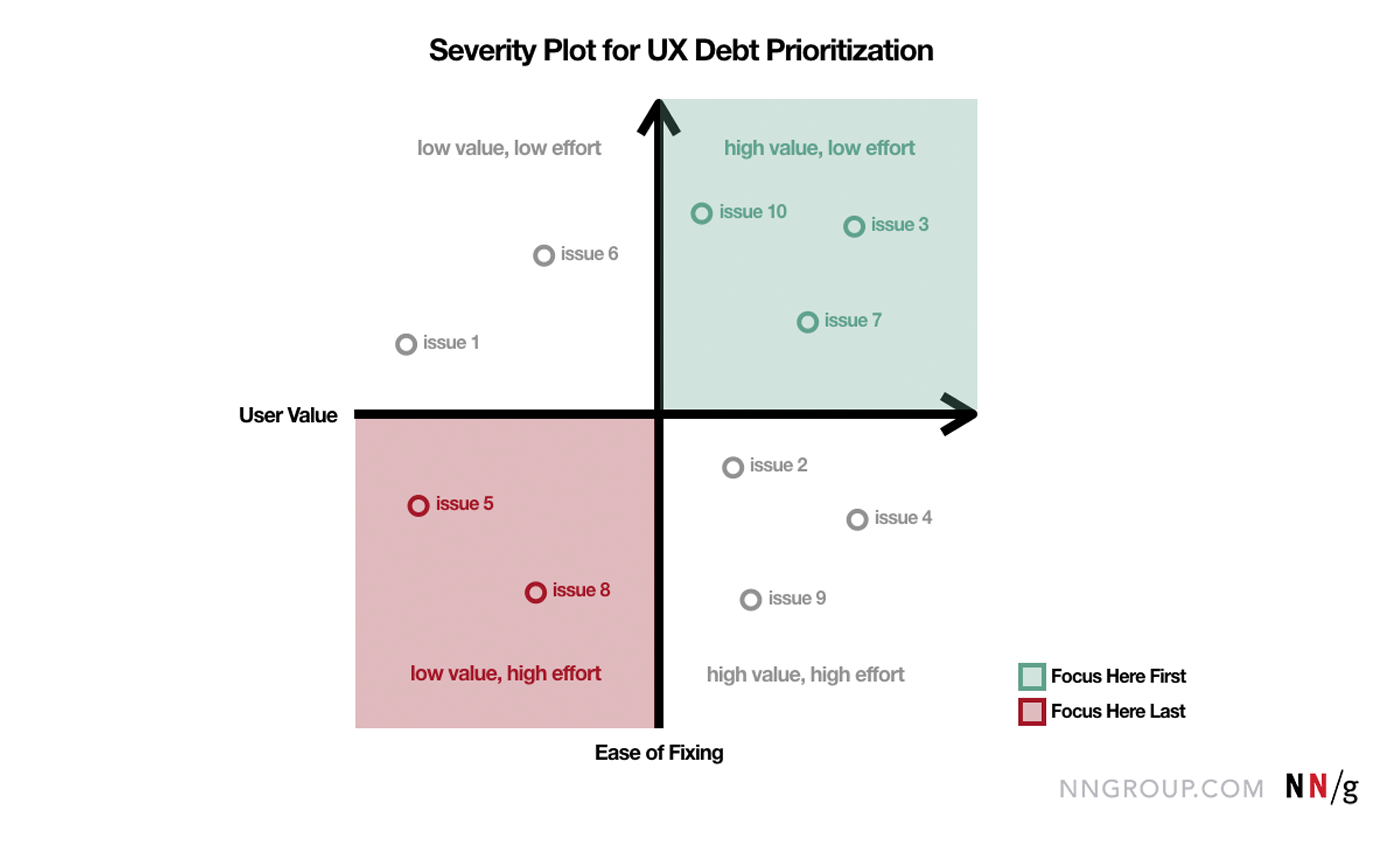
Creating a repeatable UX audit workflow
A structured UX audit process helps teams track debt consistently. Defining checkpoints, standardizing evaluation criteria, and documenting findings ensures UX issues don't get rediscovered repeatedly.
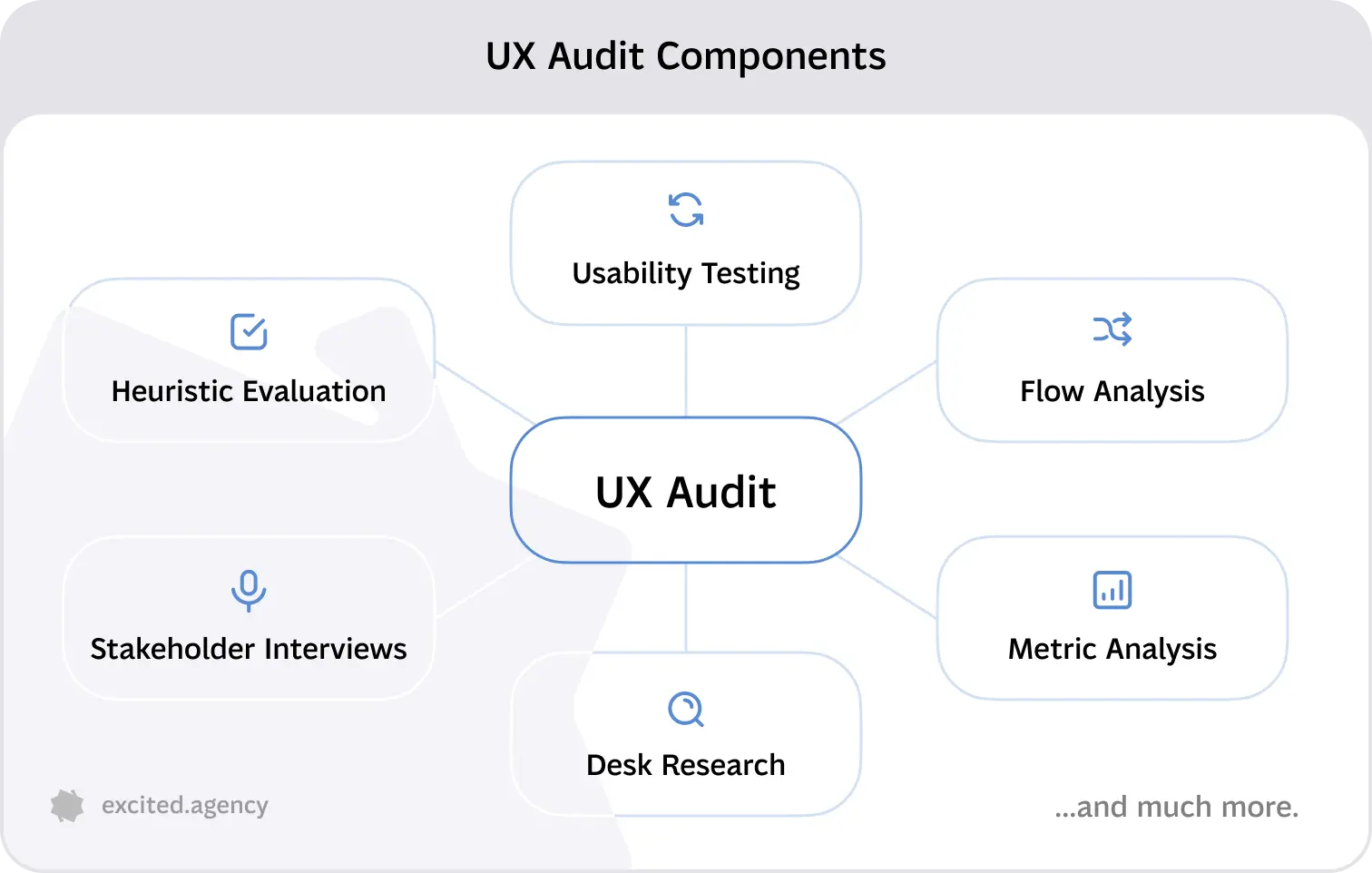
Another potent design tool is heuristic evaluation which gives a structured framework to evaluate interfaces. This framework includes 10 heuristics as follows:

Managing UX debt within cross-functional teams
UX debt is not a design-only problem. Product, engineering, and design teams need aligned expectations and shared responsibility. Integrating UX considerations into planning rituals helps prevent debt from being pushed downstream.
Strategies for Reducing UX Debt
Reducing UX debt requires both structural improvements and incremental iteration.
Building a stronger design system
Consolidating components, establishing clear rules, and enforcing consistency reduces fragmentation. A well-maintained design system becomes a foundation for scalable product growth.
Improving user experience through iteration
UX debt doesn't have to be eliminated all at once. It's rarely, if ever, possible to remedy debt in one fell swoop. Incremental fixes, validated through testing and refined using real usage data, allow teams to improve the experience without disrupting delivery.
Designing for long-term scalability
Adaptable layouts, flexible architecture, and forward-looking design decisions help products evolve without accumulating unnecessary debt.
Preventing UX debt in future releases
Preventing UX debt is more effective than fixing it later. Let's talk about how.
Aligning product owners and design teams
Shared goals, clear communication of trade-offs, and agreed-upon priorities reduce misalignment. UX decisions grounded in business and user needs prevent shortcuts that lead to debt. That's why all major decisions need to be with the awareness of all relevant stakeholders.
Integrating UX reviews into agile sprints
Adding UX checkpoints before development and including testing in sprint scope ensures issues are caught early, when they're easier to fix.
Setting up design and engineering standards
Clear guidelines, consistent implementation, and version control help maintain quality as teams and products scale. The principles of consistency applies not only to the design system as the outcome, but the life and growth of design system as a living and breathing document.
When to resolve UX debt versus ship features
Balancing UX cleanup with feature development is a constant challenge.
Teams should evaluate opportunity cost, combine cleanup with new releases when possible, and use hybrid roadmaps that allocate time for both growth and maintenance. Quick wins, dedicated debt time, and automation can reduce UX debt without slowing momentum.
Balancing new feature development with UX cleanup
Evaluate opportunity cost
Before shipping new features, teams should assess how existing UX debt affects user outcomes and development efficiency. In many cases, unresolved UX issues reduce the real impact of new functionality by increasing friction, confusion, or abandonment.
Combine cleanup with new releases
UX cleanup does not need to happen in isolation. Addressing UX debt while building new features helps avoid reinforcing outdated patterns and reduces the need for future rework.
Use a hybrid roadmap
A hybrid roadmap allows teams to plan feature delivery and UX cleanup in parallel. This approach ensures continuous progress without letting UX debt accumulate unchecked.
Reducing UX debt without slowing down growth
Target quick wins
Small, high-impact improvements, such as fixing confusing labels, simplifying interactions, or aligning components, can significantly improve usability without major redesign efforts.
Even though, the initial user feedback may be mixed, this will all be worth it in the long run.
Assign dedicated debt time
Allocating a recurring portion of sprint capacity to UX debt helps teams address issues consistently. Regular attention prevents UX debt from growing faster than it is resolved. In other words, UX optimisation should be something that's always on the radar.
Automate repetitive fixes
Reusable components, shared patterns, and enforced standards reduce the need for repeated manual fixes and help prevent the same UX issues from resurfacing. For larger teams, it's sometimes a good idea to assign this responsibility into a specific person. That way there is no ambiguity as to who is in charge of keeping things consistent.
How to prioritise UX debt based on user impact
Focus on critical journeys
UX debt affecting core user flows, such as onboarding, activation, or checkout, should take priority, as issues in these areas have the greatest effect on user success and business results. However, if things are not as clear with your product, you should always consult relevant metrics to form hypotheses that have the most impact.
Analyze usage data
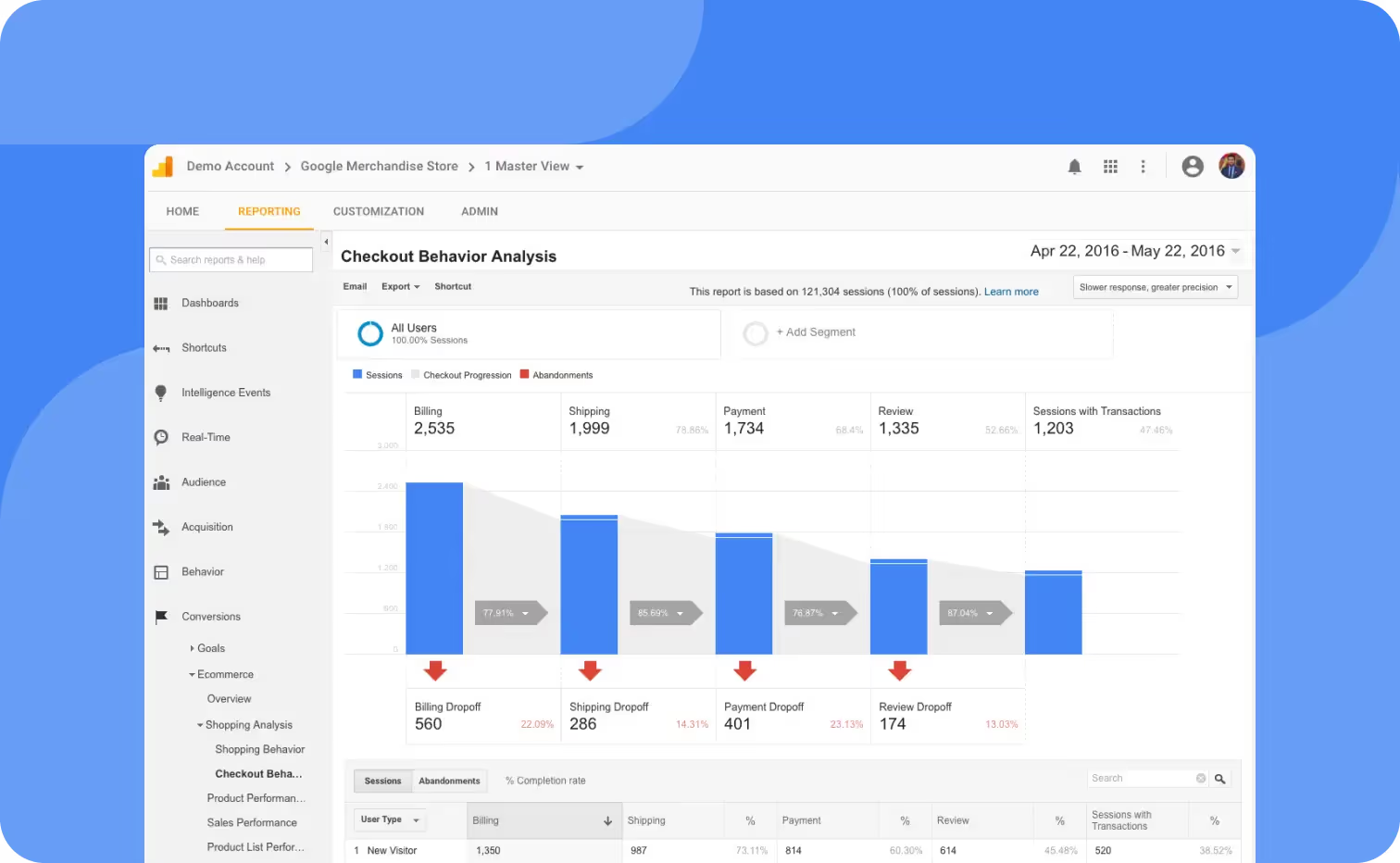
Product analytics, session recordings, and error tracking reveal where users struggle most. Data-driven insights help distinguish high-impact UX debt from minor inconsistencies.
Consider business goals
Prioritization should align with business objectives. UX improvements that support retention, conversion, or strategic initiatives should outweigh purely cosmetic fixes.
Final thoughts on tackling UX debt
Managing UX debt is an ongoing process. UX evolves constantly, and every new feature introduces new risks.
Sustainable product growth depends on continuous monitoring, user-centric decisions, and cross-team collaboration. By embedding a culture of quality and maintaining updated systems, teams can prevent UX debt from undermining their product's long-term success.
Service short description